Terminal addressing / BLP-AD — module segment, station 11 of 17
A Module Reaches the Welder in One of Three States. The Welder Can See Two.
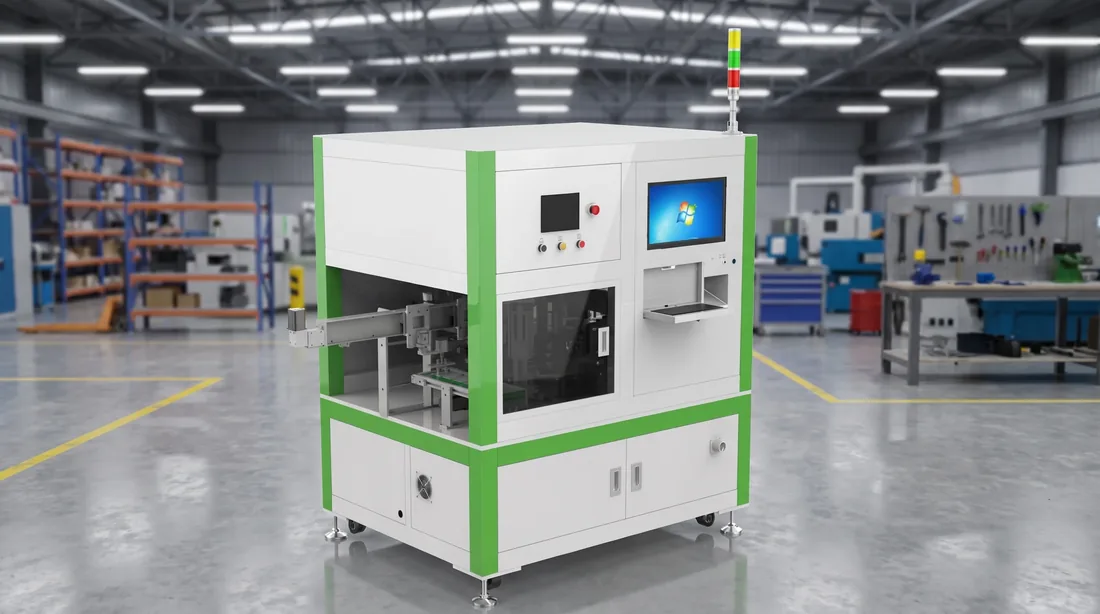
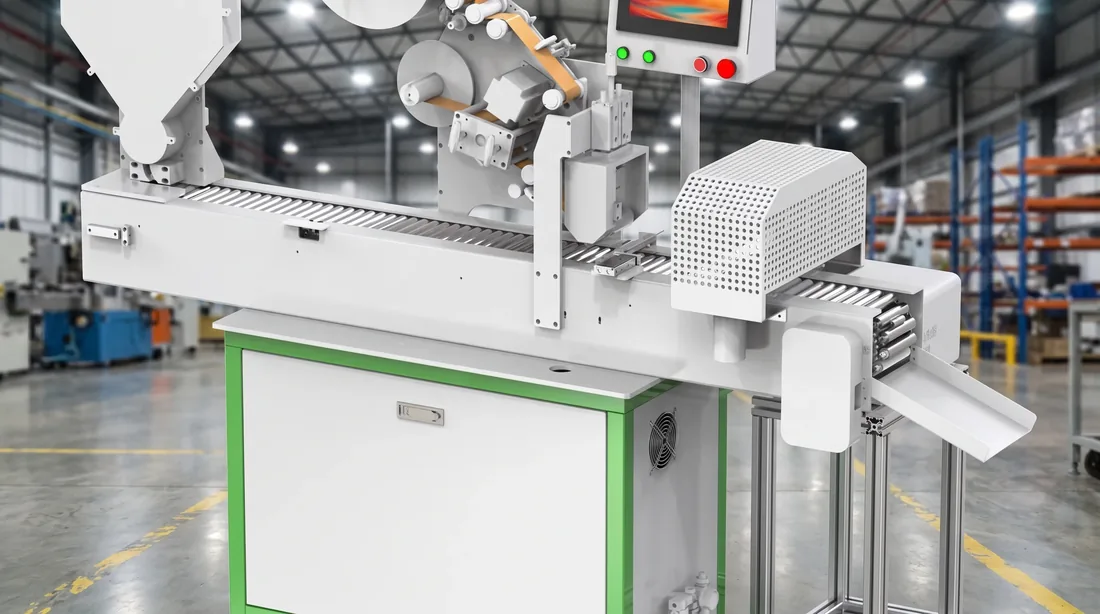
Two questions have to be answered before any energy goes into the part: where each terminal is, and whether it is the terminal the program thinks it is. One vision set answers both, in line, at 200 to 300 millimetres per second.
⚠️ The third column below is not a machine state. It is what you have when nothing measured — and it is the only one of the three that a welding station cannot tell apart from the first.
The three states, and who knows about each
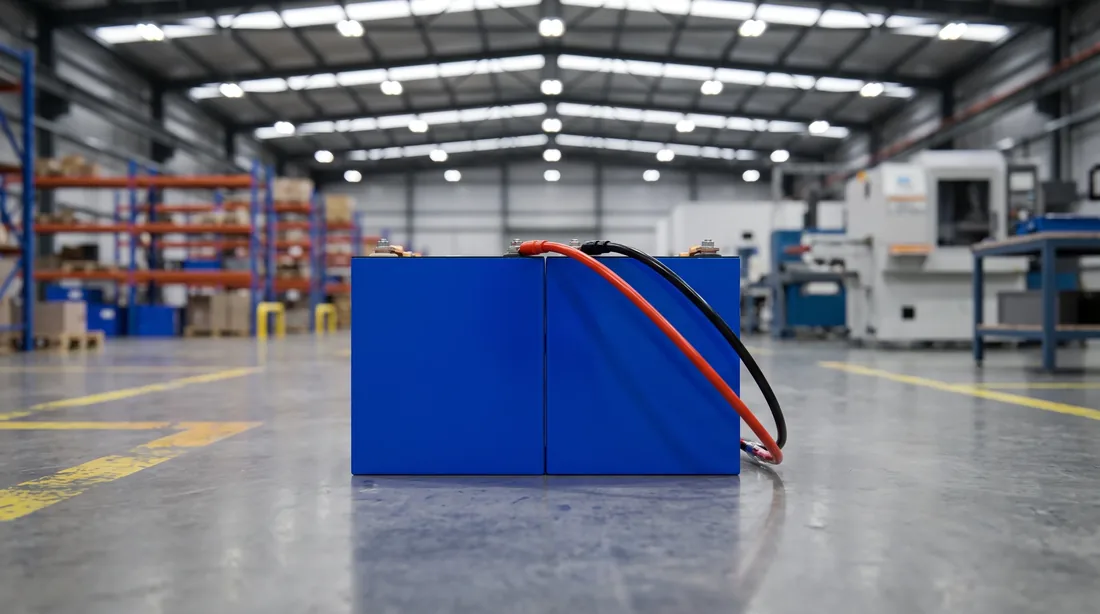
| At the moment of welding | Established, correctAddressed at station 11 | Established, reversedAddressed at station 11 | Never establishedNo station asked |
|---|---|---|---|
| Who knows which pole is which | The line does, before anything is fitted over the terminal | The line does, and it stops the module here | Nobody. The module looks identical to the first column |
| What happens next | Busbar plate and CCS go on, then the joint is made | Held, with the terminals still bare | The joint is made anyway |
| Where it surfaces | Nowhere — there is nothing to surface | Here, on a bare terminal, before hardware | After the joint existsWhy that is a different problem → |
| What it has cost by then | Nothing beyond the cycle it took | One module, held, and the cycle | A joint that has already been made |
- ≤±0.2 mmAddressing position
- 200–300 mm/sMotion speed
- 1Vision set, two questions
- 11 / 17Station in the module segment
What each of the three states costs, and who finds out first
Two of them are ordinary industrial events with a known price. The third is what makes this station a line item rather than an option, because it has no price until much later.
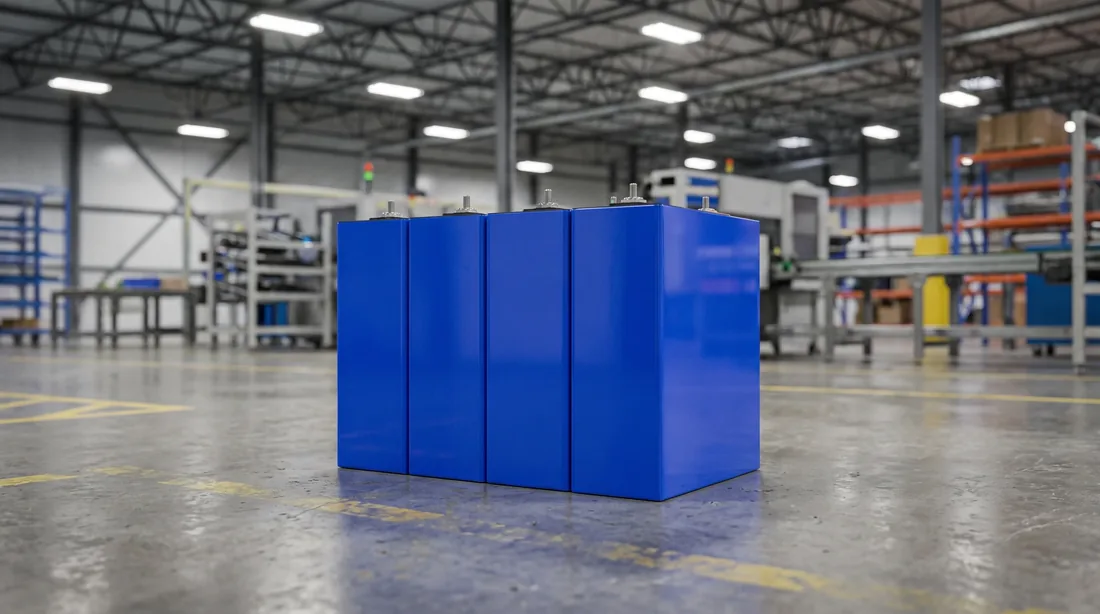
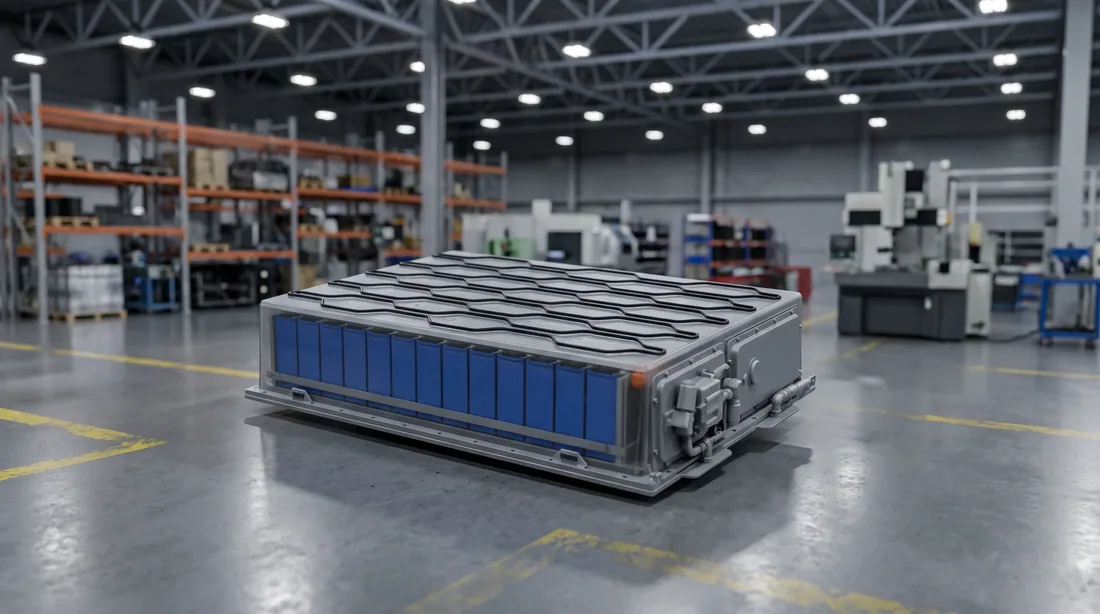
Established and correct
Established and reversed
Never established
A quotation almost never separates these three. It says vision inspection and leaves you to assume the first state is what you are buying. The useful question is narrower: at which station number does the asking happen, and what is sitting on top of the terminal when it does.
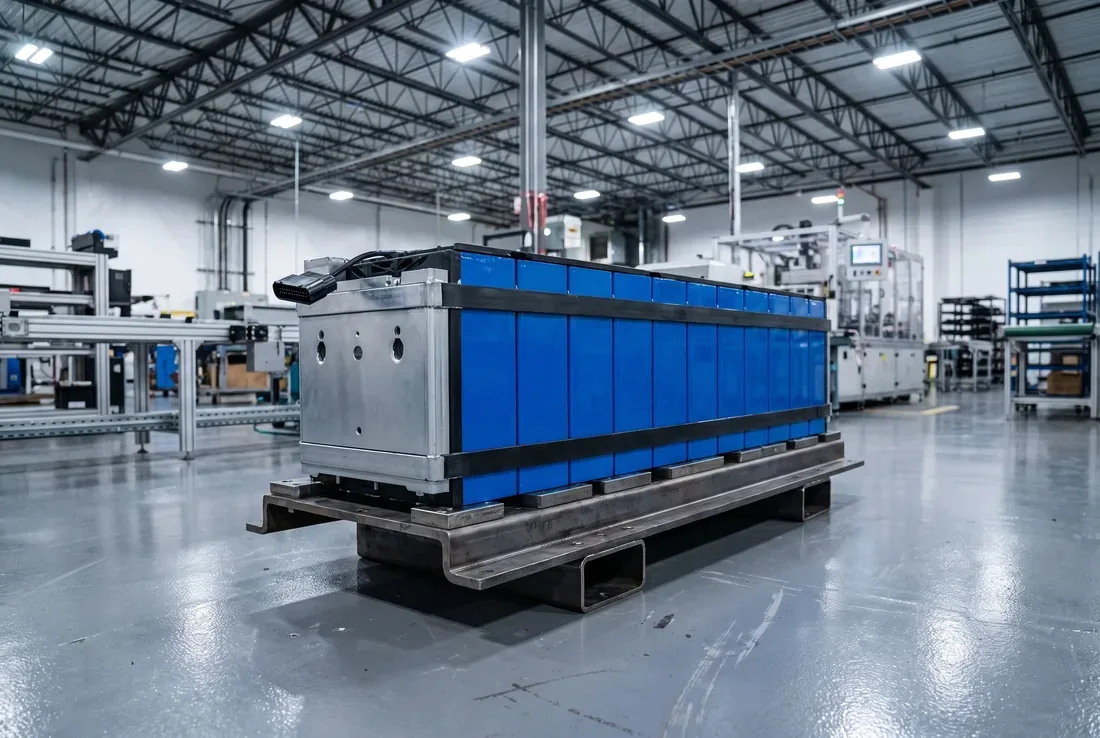
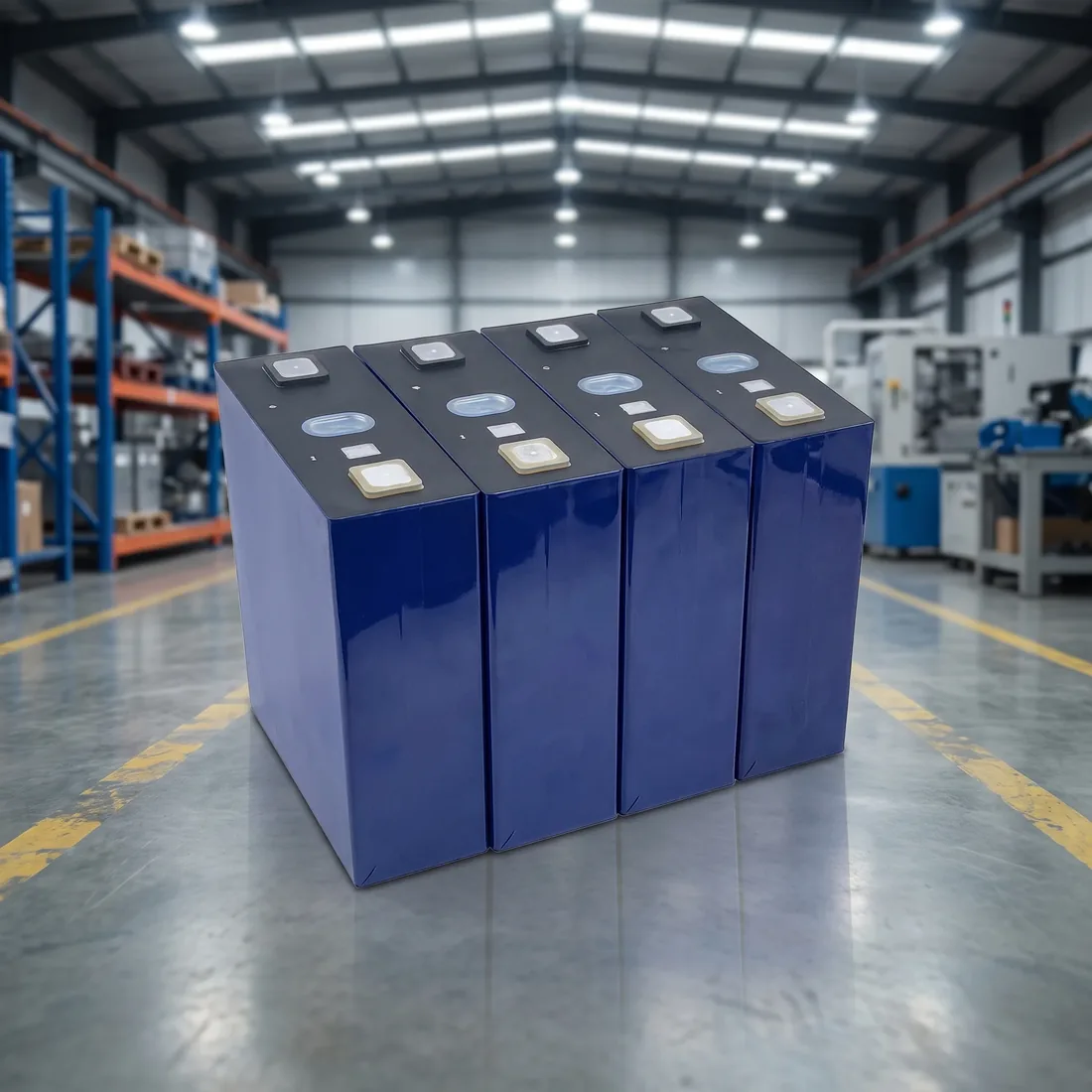
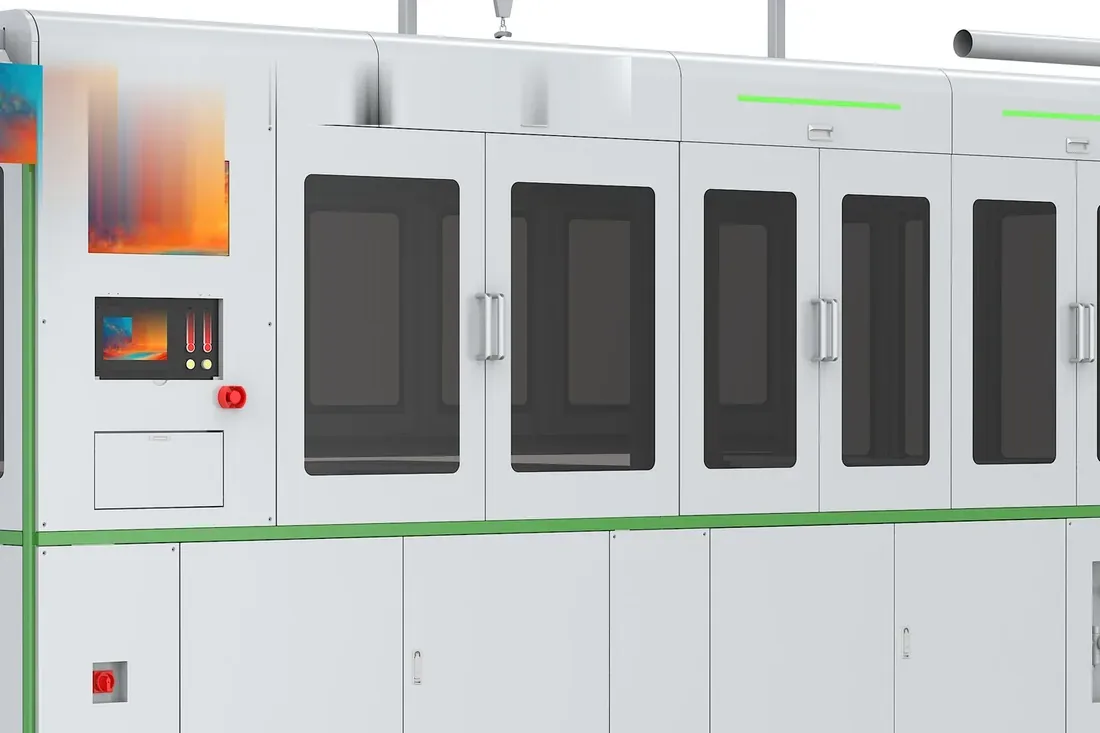
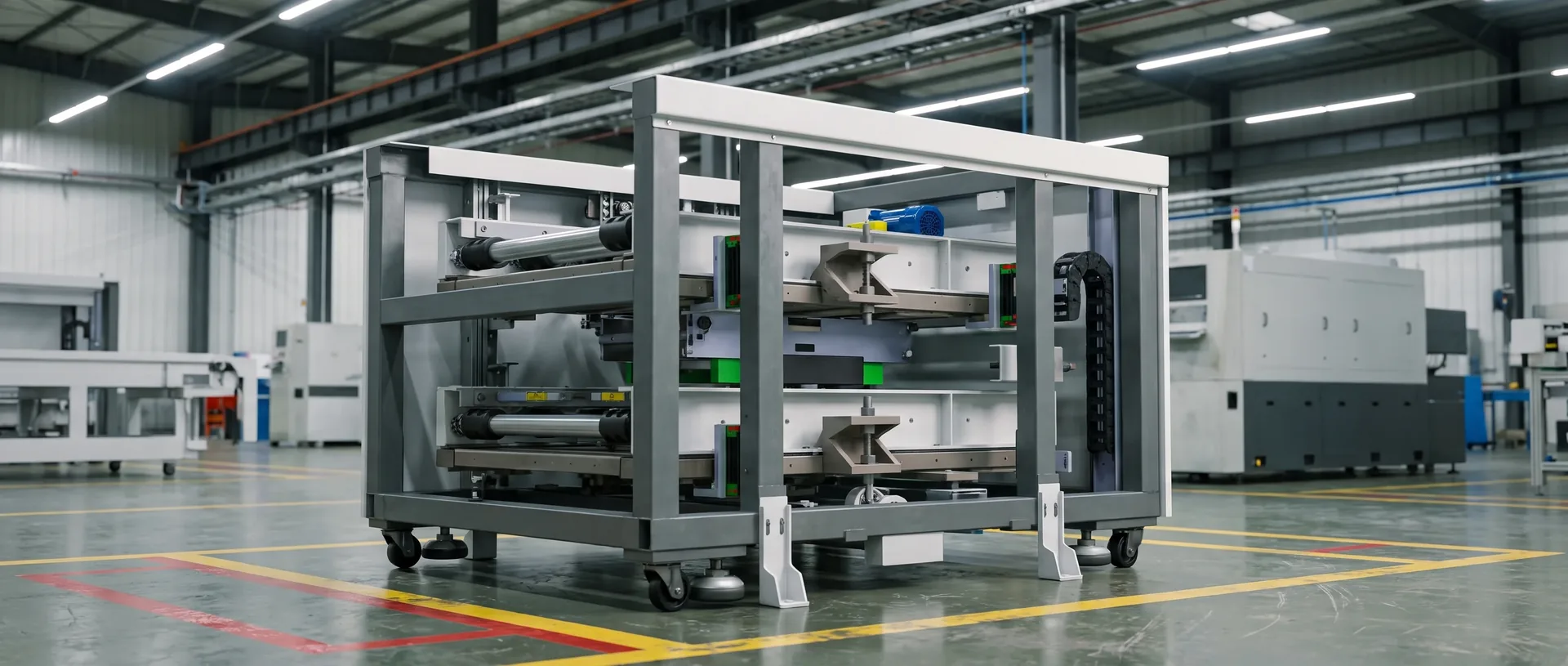
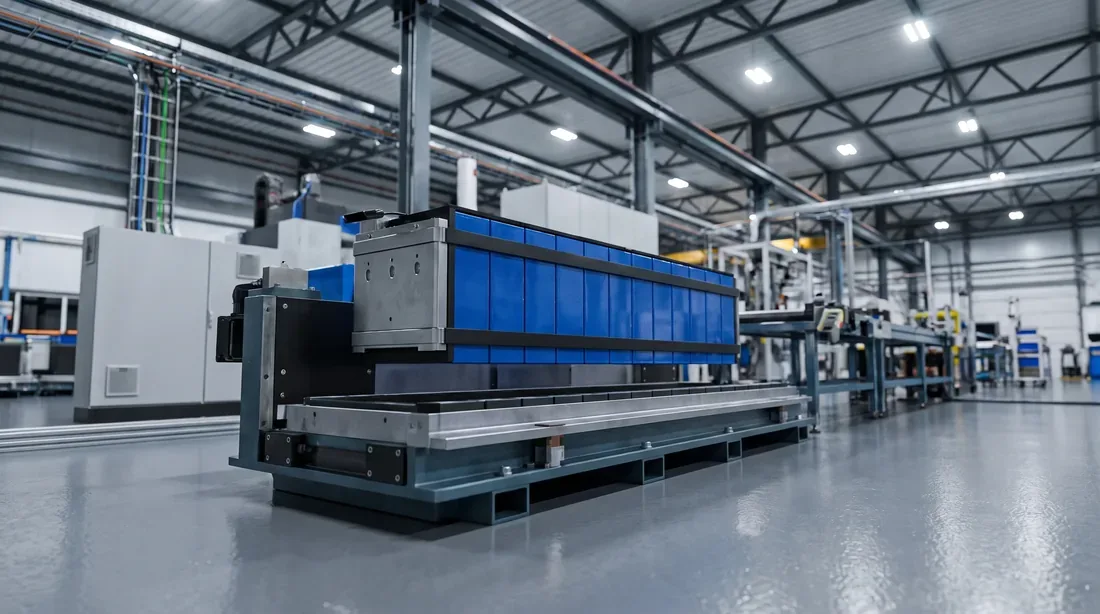
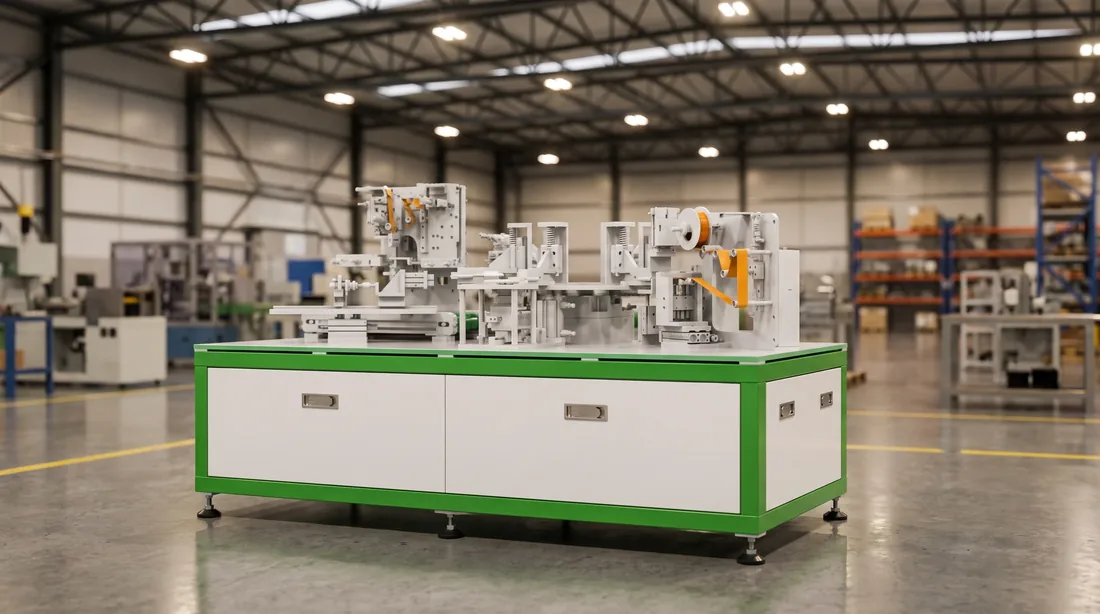
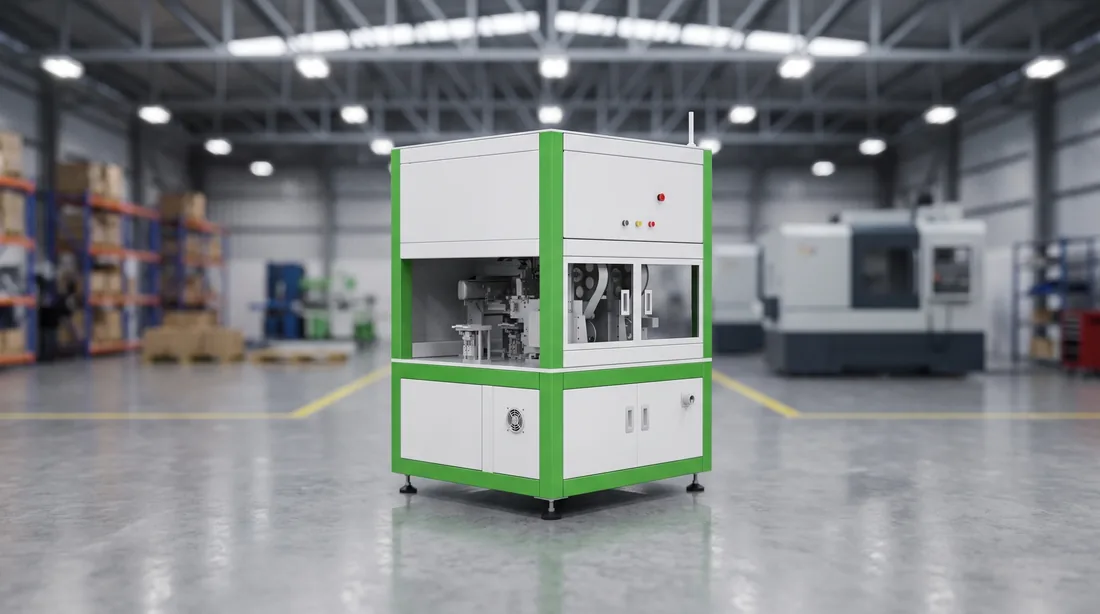
⚠️ The three images are the same module at three moments. Only the first two are moments at which a question can still be asked cheaply.
Station eleven of seventeen, and the last one that reads
Its place in the sequence is not an administrative detail. It is the reason the figures on this page mean what they mean, and it can be read straight off the published station list.
Module segment — 17 stations, and this page is number 11
- 09 Pressing and steel banding — the stack stops being cells and becomes one object
- 10 Polarity and insulation test — an electrical question, with its own instruments
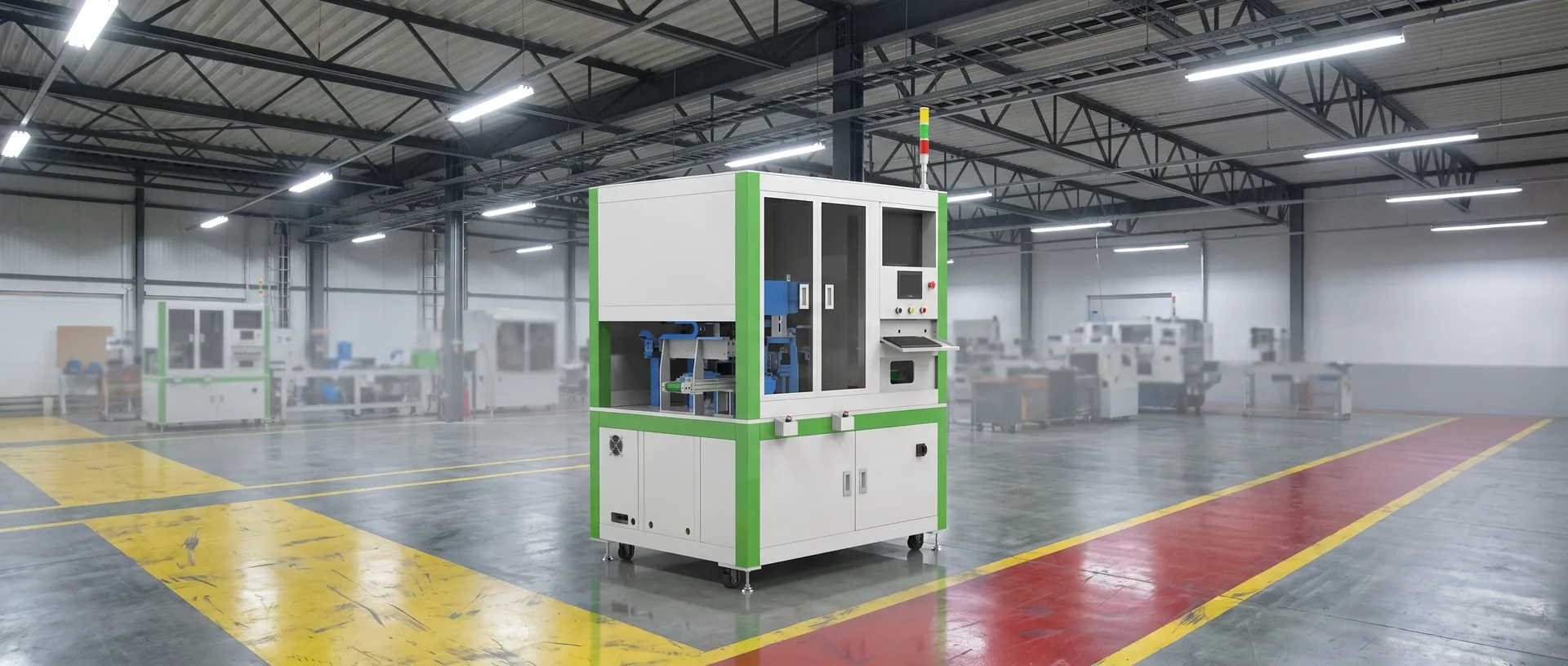
- 11 Terminal addressing and laser cleaning — this station, and the terminals are bare
- 12 CCS and busbar plate fitting — hardware goes on top of the terminals
- 13 Busbar laser welding — the joint is made
Read that downward and the boundary is obvious. Everything above station 11 is the line finding out what it has; everything below it is the line acting on what it found. This station is the hinge — and the last place where a terminal can be looked at directly rather than through something bolted over it.
The full station list, with what each one is entitled to assume from the one before, is on the module assembly line page. It is not restated here.
Take this to any supplier
"Which station number does your vision addressing run at, and what is fitted over the terminal at that point?"
A weld cannot ask whether the terminal under it is the right one. The last station that could ask is this one.
Before
After
Two figures and one architecture, and what each is a criterion for
⚠️ Published here for the first time on this site. The second column deliberately does not repeat the figure — it says what the figure can be held to.
| What is published | What it is a criterion for |
|---|---|
| Addressing positionWhere a terminal was found | ≤±0.2 mmThe position the next two stations are entitled to assume. It is a criterion about where a terminal was found on this module — not a promise about where your cell sits inside the stack, which is settled upstream by pressing and banding. → Where that is settled |
| Motion speedHow fast the head travels the module | 200–300 mm/sThat this is a station rather than an inspection. A check that cannot keep up with the line becomes a sample, and a sample answers the question for some of your modules. → section 07 |
| One vision setPosition and polarity, one pass | Both questionsThat both answers come from the same part at the same moment. Split them across two devices and a module can pass one check and miss the other, with nothing in the line that notices. → section 11 |
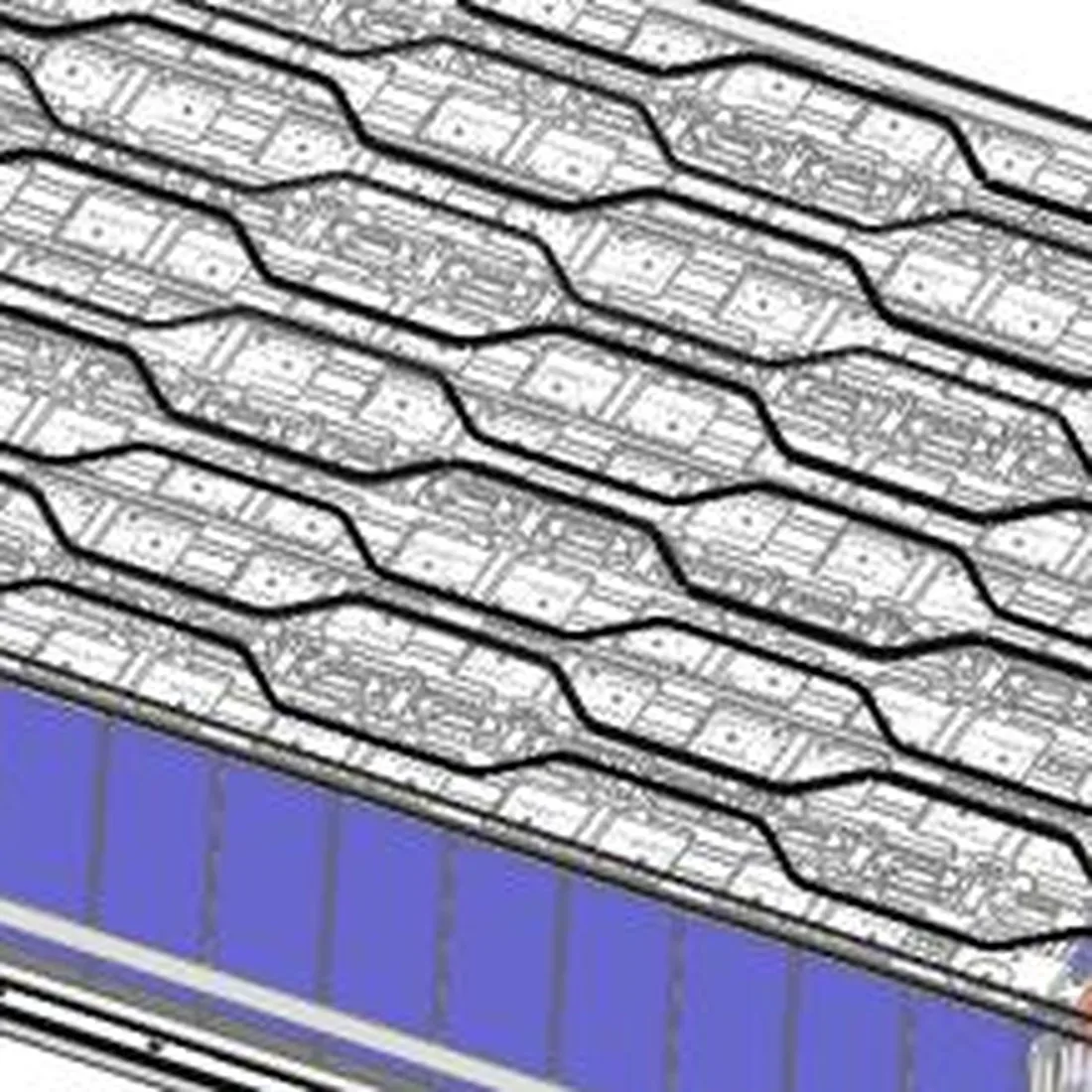
Why this happens before the busbar plate goes on, not after
This is the part of an addressing station that decides whether its accuracy figure means anything, and it is settled entirely by which station number the station carries.
- 01 · Why this and not the tolerance
Every supplier quotes a positioning figure. Almost none of them says where in the sequence it is taken
A tolerance is a statement about a measurement, and a measurement is only worth what the thing it was taken from is worth. On this line that part is published rather than implied: station 11, after banding and before CCS fitting. - 02 · What goes wrong if it moves later
Measure after station 12 and what you are measuring is hardware
Once the busbar plate and the CCS are seated, the terminal has something over it. A vision set looking at that assembly can return a position for what it can see — and what it can see is the part that was just fitted, not the terminal underneath it. The tolerance is unchanged; what it describes is not. - 03 · What we do instead
One pass, bare terminals, both questions asked together
The vision set returns a terminal position to ≤±0.2 mm and judges polarity in the same pass, while the stack is banded but still open. Laser cleaning carries the same station number and works on the same exposed terminal — one station, one moment of access. - 04 · Why the speed figure is the evidence
200 to 300 mm/s is what makes it a station instead of a sample
A check that has to interrupt the line to happen will eventually be done to fewer modules than the line makes — that is not cynicism, it is what happens to every check that costs takt. The speed range is the published reason this one does not have to be rationed. - 05 · If a supplier offers the opposite
Ask for a station number and an object, not a tolerance
"Which station number does your vision run at, and what is on top of the terminal at that moment?" ⚠️ It is one email, the answer is a number and a noun, and it tells you more about the machine than its datasheet line does.
None of this makes the tolerance larger or smaller. It decides what the tolerance is a tolerance about — and that is a property of the sequence rather than of the camera. Which is why the station number is printed beside the figure on this page instead of living in a separate document.
The shortest version of this page
"An addressing figure taken through the hardware that was fitted over the terminal is a figure about the hardware."
What the welding station is entitled to assume
Two hundred to three hundred is a window, not a setpoint
Ranges make buyers suspicious, and usually they should. This one is a range for a reason that can be stated in a sentence, so here it is stated.
What actually moves at that speed
Why a range instead of one number
What the range actually buys you
What it does not tell you
Takt for the whole segment is a different subject with a different owner: it is published per configuration on the tier selection page, and nothing on this page should be read as a takt claim.
An accuracy figure is a promise about a datum, not about a part
This is the one argument on this page we did not work out here. It is made once on the conveying page, and it applies to every accuracy figure quoted anywhere on this line.
Where the figure is measured from
Why it is repeated on this page at all
What it means when you compare quotations
There is a version of this page that prints ±0.2 mm in large type and stops. It would be shorter, and it would be worth less, because the number on its own cannot be checked by anybody reading it.
The same fault, found at three stations, with three different prices
A wrong or unread terminal position does not get expensive gradually. It gets expensive at one specific moment, and the columns below sit on either side of it.
| At the moment it is found | Station 11Here — addressing | Station 13At the busbar weld | Station 16Module end-of-line test |
|---|---|---|---|
| Terminals still bare | Yes — nothing has been fitted over them | Plate and CCS are already seated | And welded over |
| The joint exists | Not yet — two stations away | It is being made now | It was made three stations ago |
| Who can still act cheaply | This station, by holding the module | Partly, and it depends what has been welded | The module is finished by then |
| What has been consumed | One cycle | The busbar hardware and the joint | The module, plus a test slot on a gate that had other work to do |
| Where the argument lives | This page | Busbar welding station | End-of-line testing |
We do not restate why a completed weld is a different kind of problem from an unfitted one — the equipment page makes that argument once, and it is the reason this station is worth carrying its own station number instead of being folded into the one after it.
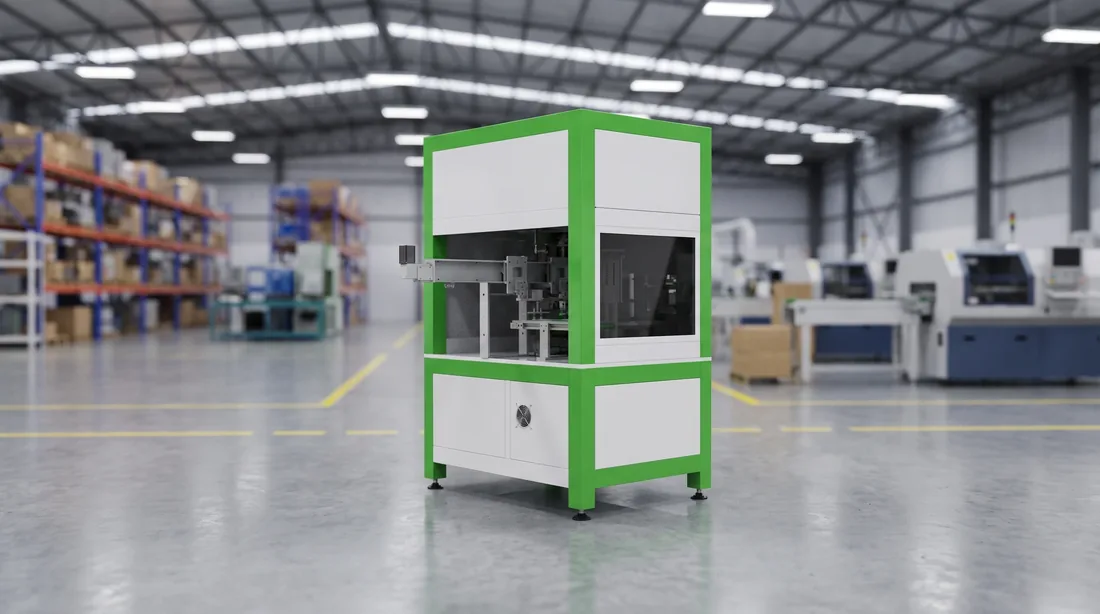
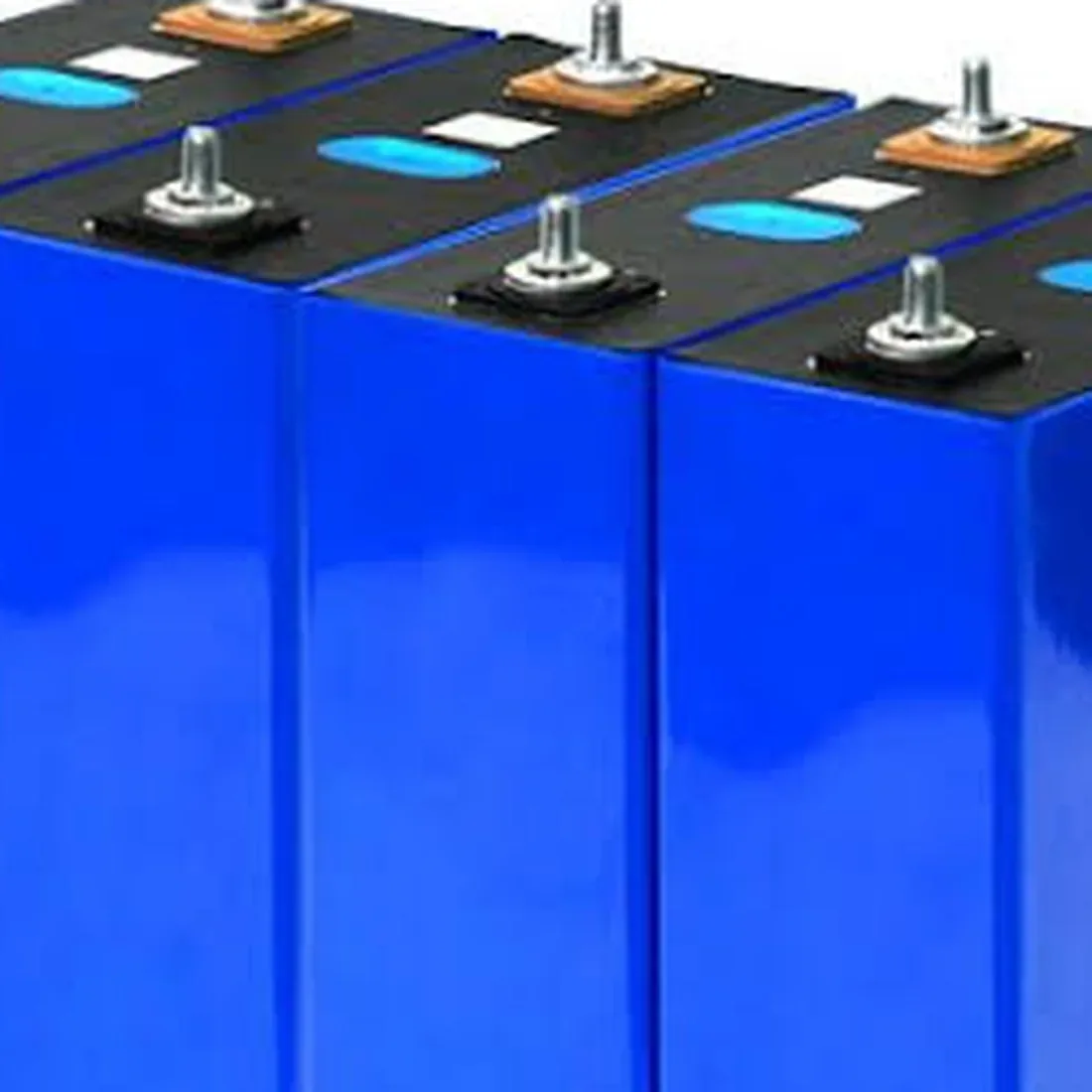
Found here, the module is still an assembly of parts.
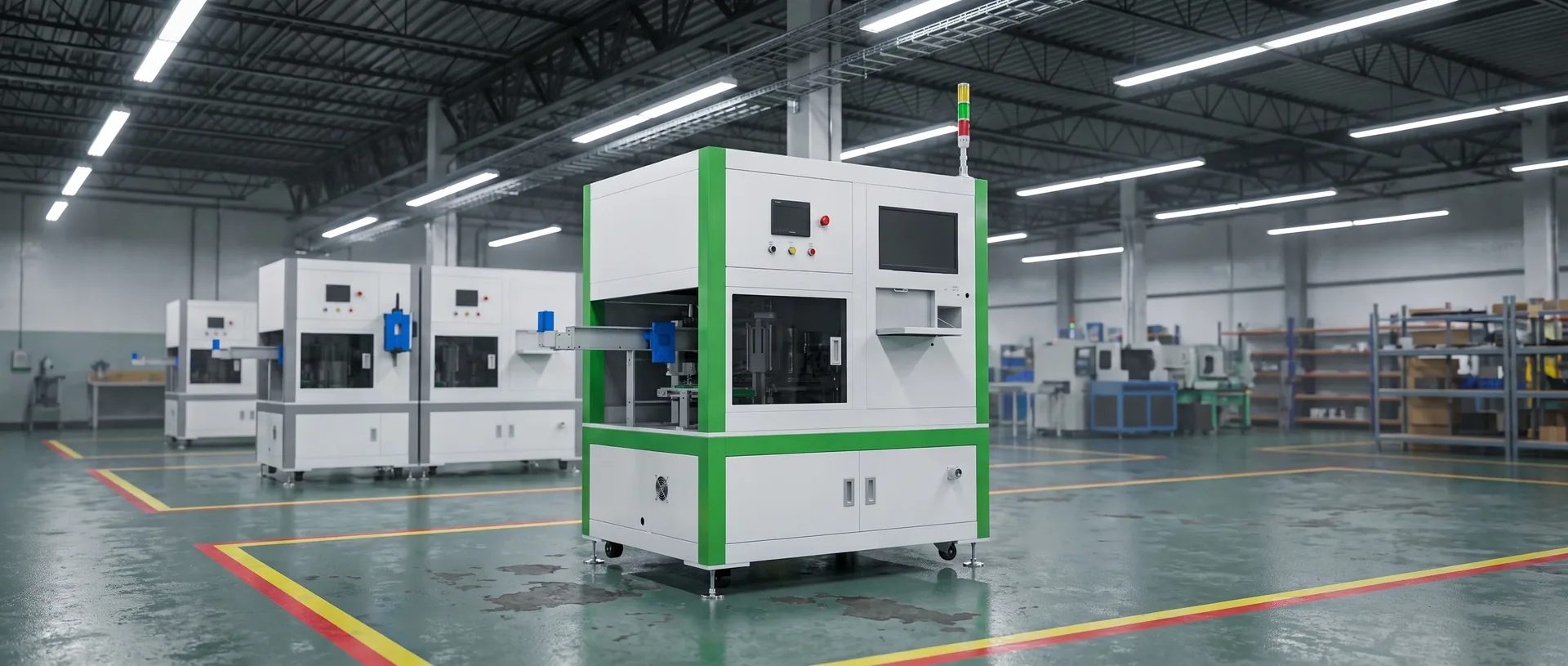
Found at the weld, part of the answer has already been written in metal.
Found at test, what is left to decide is what to do with a finished module.
Four things about your module decide what this station does
None of them is a yes-or-no. Each changes the program, the fixture or both — and all four are things you already have on a drawing.
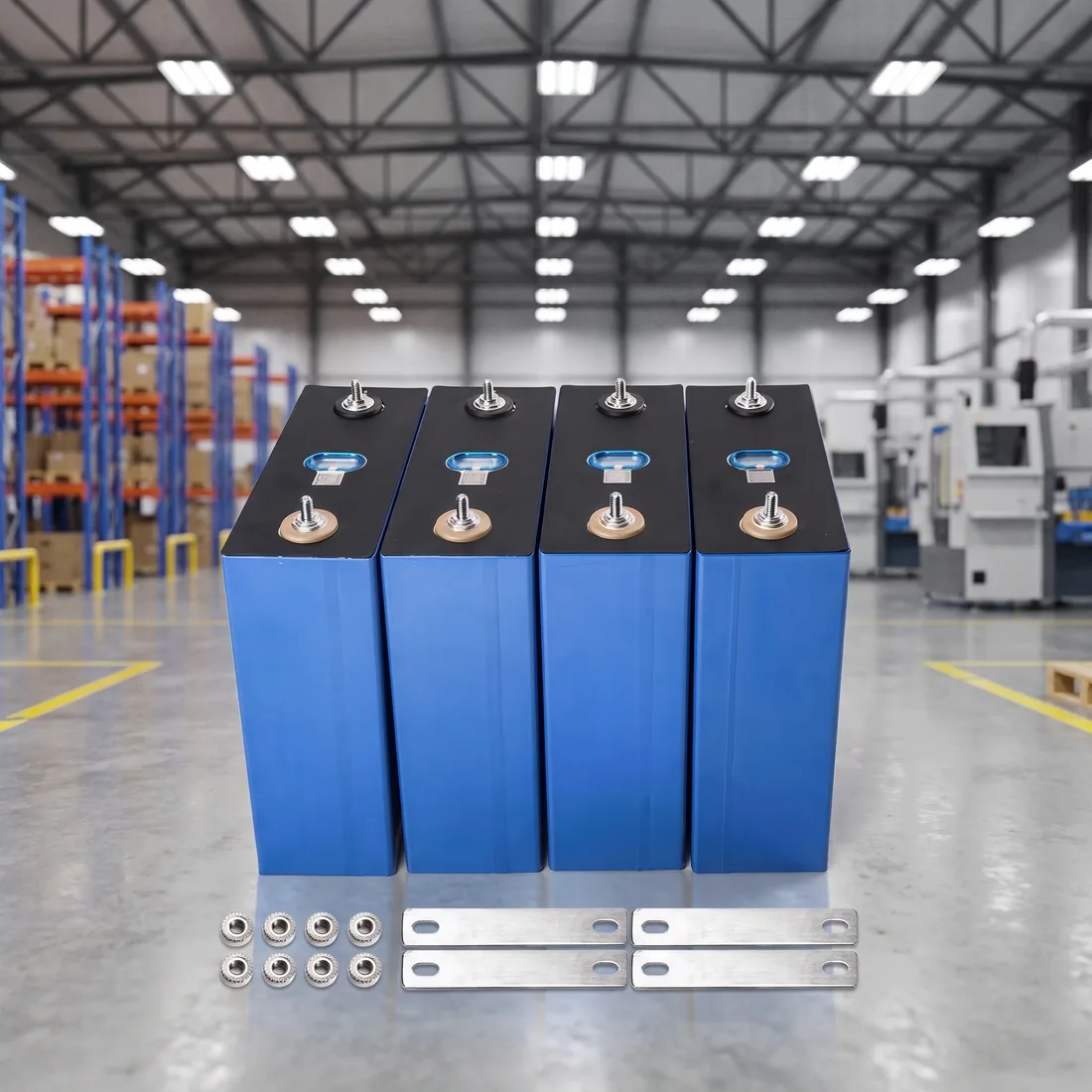
How the terminals present
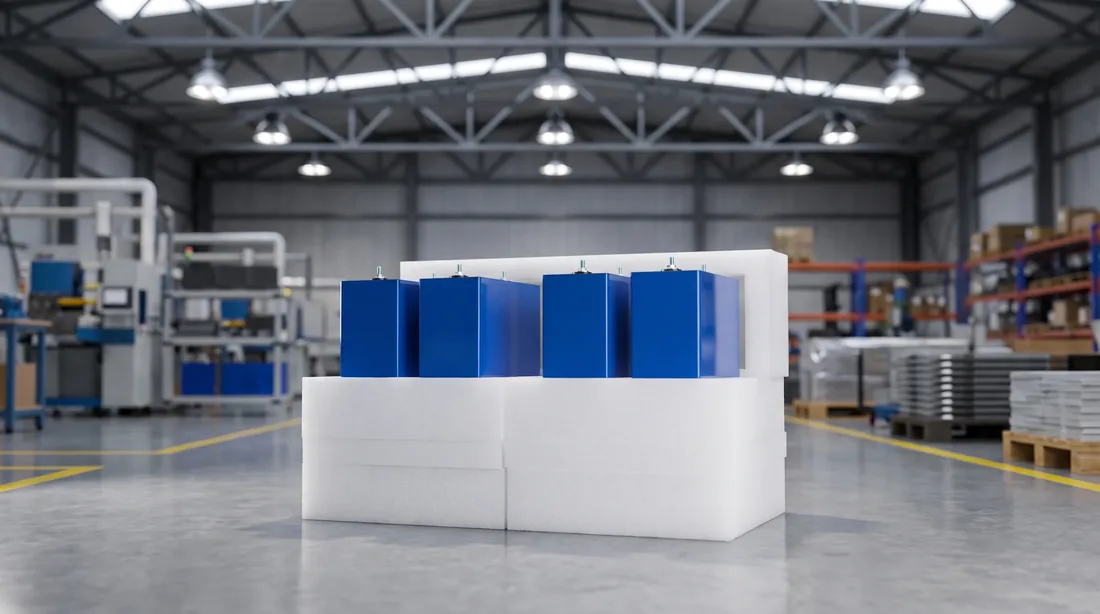
The module envelope
Your series configuration
What we need from you
Why a person is the wrong instrument for this particular check
This is not the usual argument about people making mistakes. It is narrower and easier to check: one of the two answers this station produces cannot be handed over by a human being at all.
Polarity is a yes-or-no, and a person can do it
Position is not a yes-or-no. It is a coordinate
And both answers have to come from the same instant
Put the three together and the conclusion is narrower than the usual one: this check is not automated because people are unreliable. It is automated because half of its output is a number that has to be handed to another machine.
⚠️ Automation levels on our lines are labelled per station, AUTO / SEMI-AUTO / MANUAL, and the pack segment is mostly hand work. Nothing on this page should be read as a claim about the rest of the line.
The distinction worth keeping
"The question is not whether a person is careful. It is whether the answer can be written down as a number and passed to the next machine."
Four things you will look for here and will not find
Each one is blank for a different reason, and the reasons are not interchangeable. Two are gaps in what we have been given, one belongs to another page, one should never be guessed.
| Not on this page | Why, specifically |
|---|---|
| Laser cleaning parameters | Station 11 cleans as well as addresses. No figures were released to us for the cleaning half, so none are printed here. Naming one would be inventing a specification, and it would be the easiest thing on this page to invent. |
| The rework route for a held module | Not published. What happens to a module stopped at this station is a plant procedure agreed with you, and a route printed in advance would be a route written for somebody else's plant and somebody else's people. |
| Check frequency or sampling plan | Not applicable by design — and worth saying rather than leaving blank. At 200–300 mm/s the station runs on every module that passes it, so there is no sampling interval to publish. |
| Station 10 test thresholds | Owned by the end-of-line testing page, which holds every test threshold on this line. Station 10 is an electrical test with its own instruments; this one is a vision station, and the two are not the same check twice. |
Two of these four are gaps we intend to close and two are things this page should not carry. Saying which is which costs us the appearance of completeness and buys you the ability to check what is left — which is the trade this whole site is built on.
Four questions to put to any supplier quoting a vision addressing station
Including us. Each one has a short factual answer, and a supplier who needs a paragraph to reach it is telling you something on its own.
At which station number does your vision run, and what is on top of the terminal then?
Does the same device judge polarity, or is that a separate check?
What is the positioning figure measured from?
Can it run at line speed, or does the line wait for it?
All four are answerable in a sentence by anyone who has actually built the station. They are also the four questions a datasheet is least likely to answer, because none of them is a specification line — every one of them is about where the specification was taken.
Why these four and not a longer list
Each subject on this line is stated once, and here is where
This station borrows four arguments from four other pages and repeats none of them. The links below go to the page that owns each one.
The reason this page is short on adjectives is that everything it could have borrowed is one click away instead. A station page that restates the four pages around it looks thorough and gives a buyer nothing new — and it creates four places where one figure can quietly drift into two.
⚠️ If you find the same figure stated twice anywhere on this site with two different meanings, that is a defect and we would like to know. ±0.2 mm appearing on two machine pages is the one case we already know about — see section 05.
Send the module drawing and we will mark the addressing positions
Terminal layout, series configuration, and how the terminals present. Three inputs, and what comes back is the position count for your module and where inside the speed window it lands.