Cells in at one end, tested packs off the other — one takt across both segments +86 15327155363 [email protected]
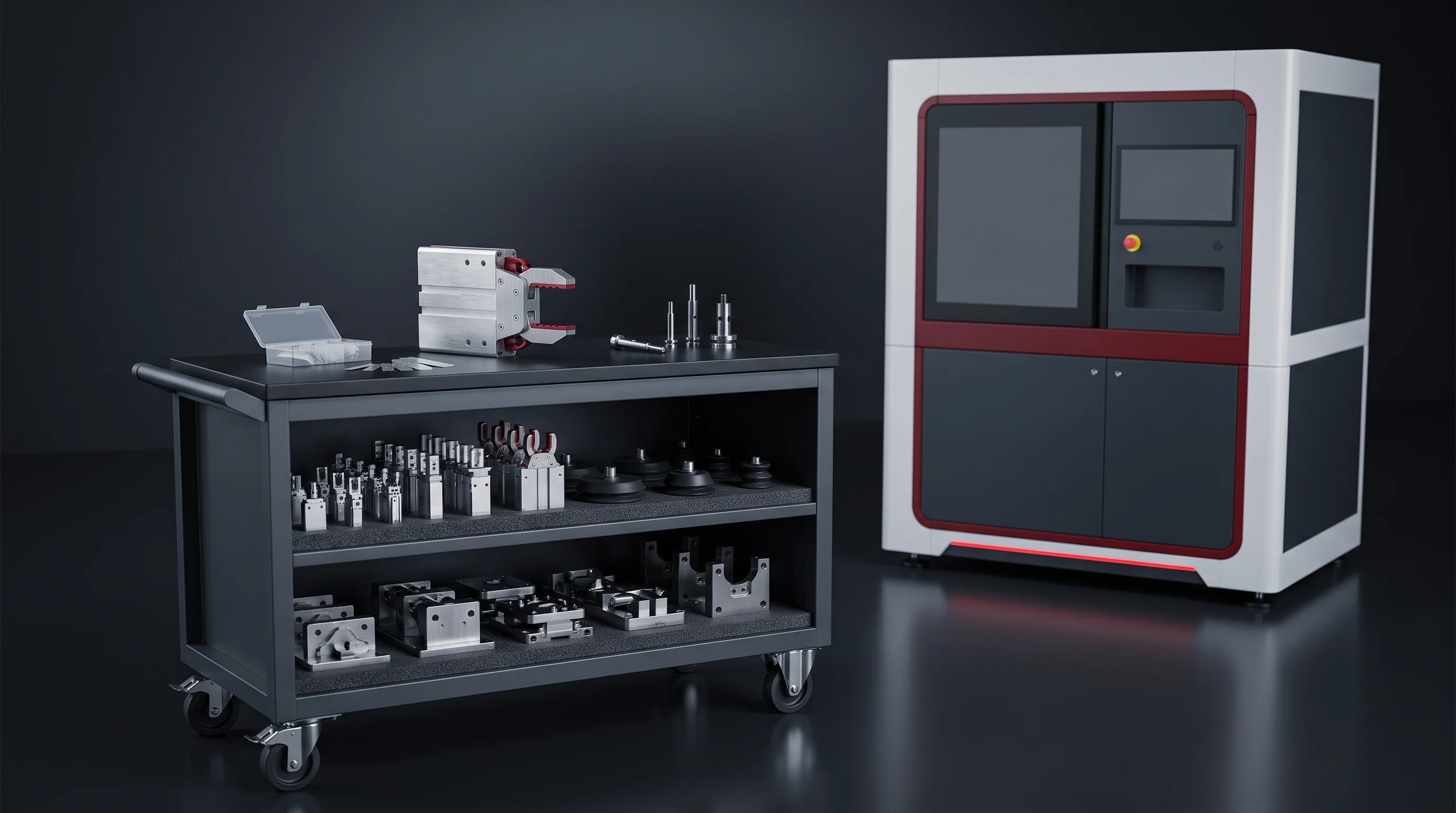
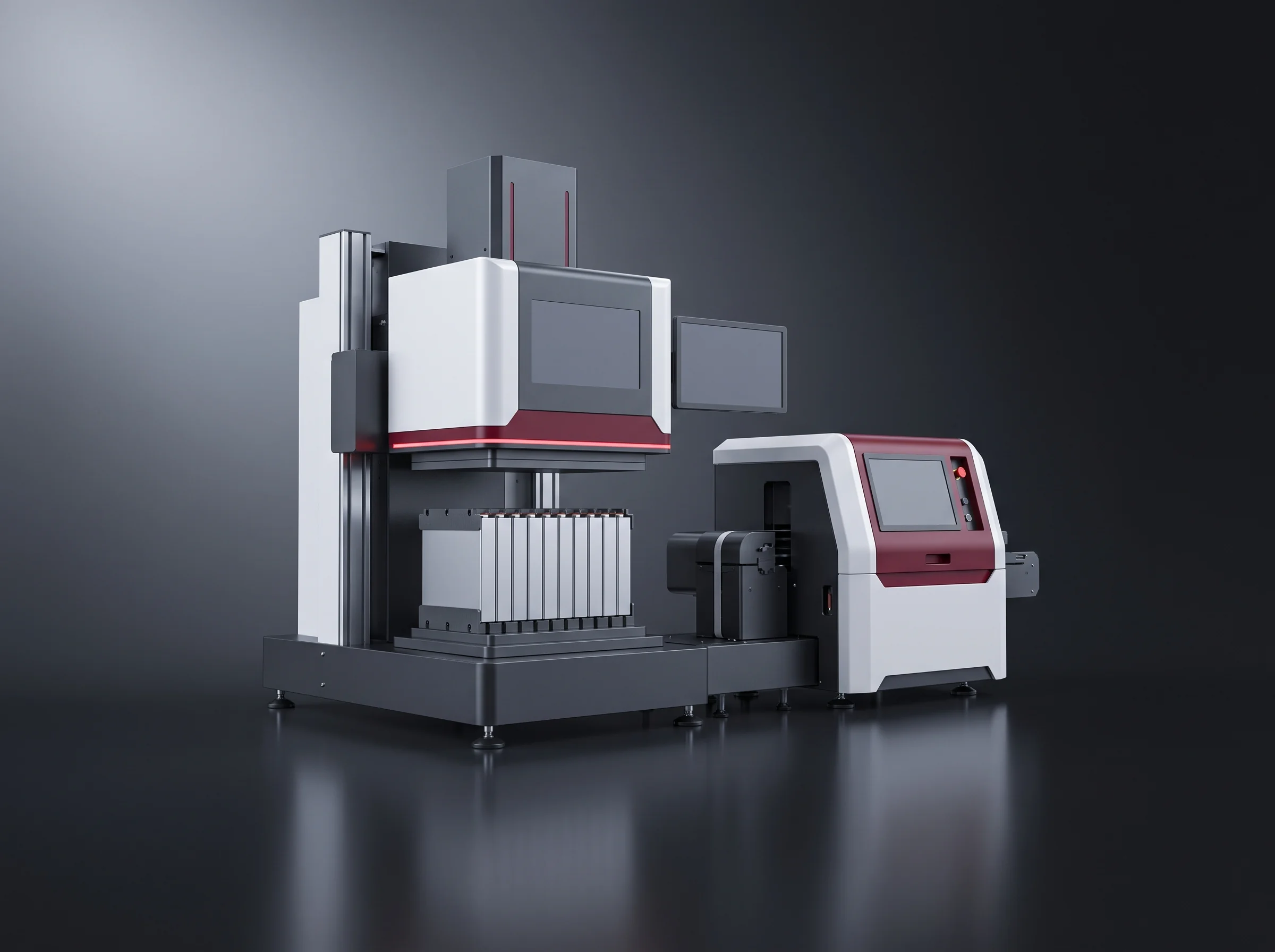
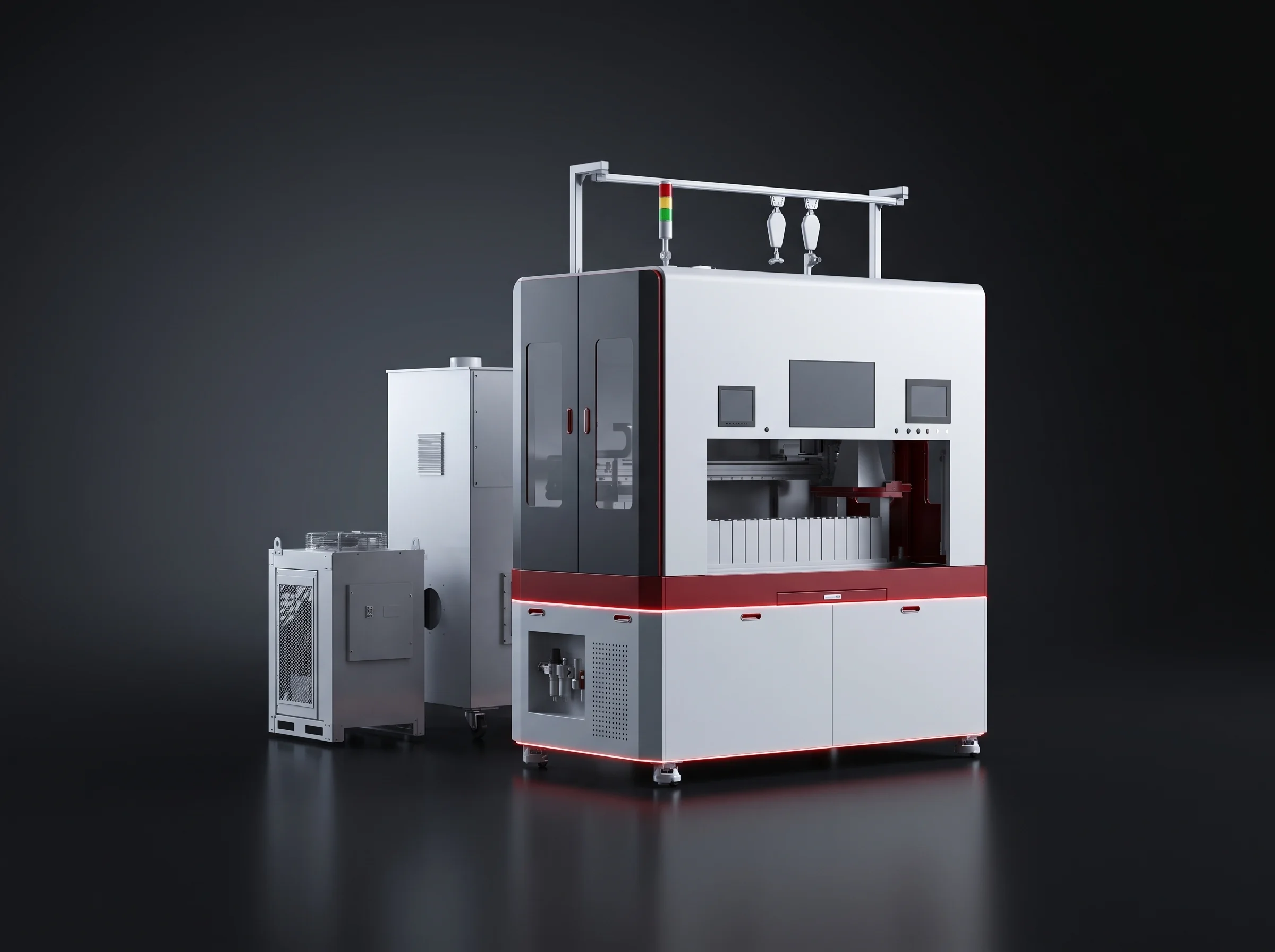
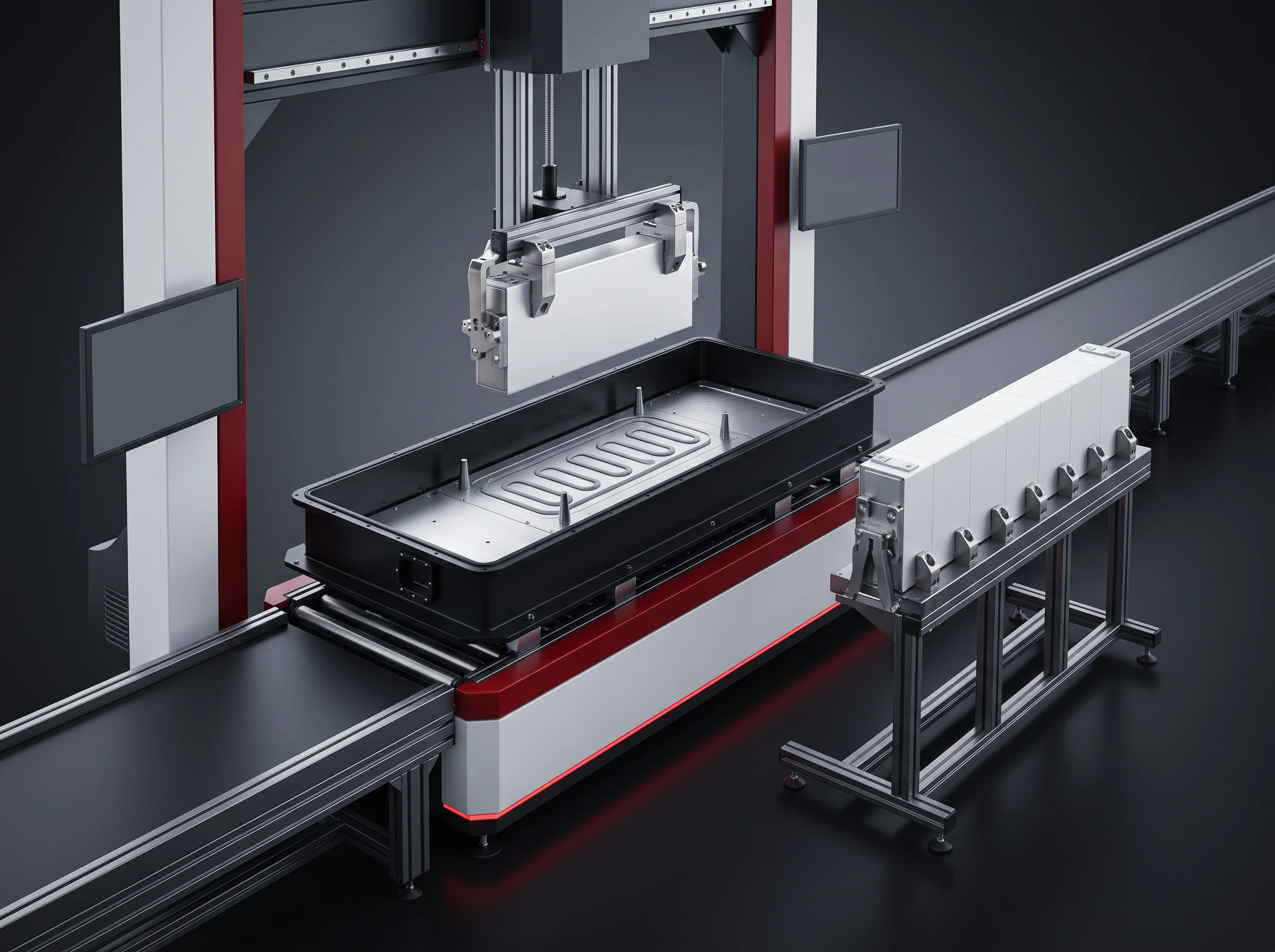
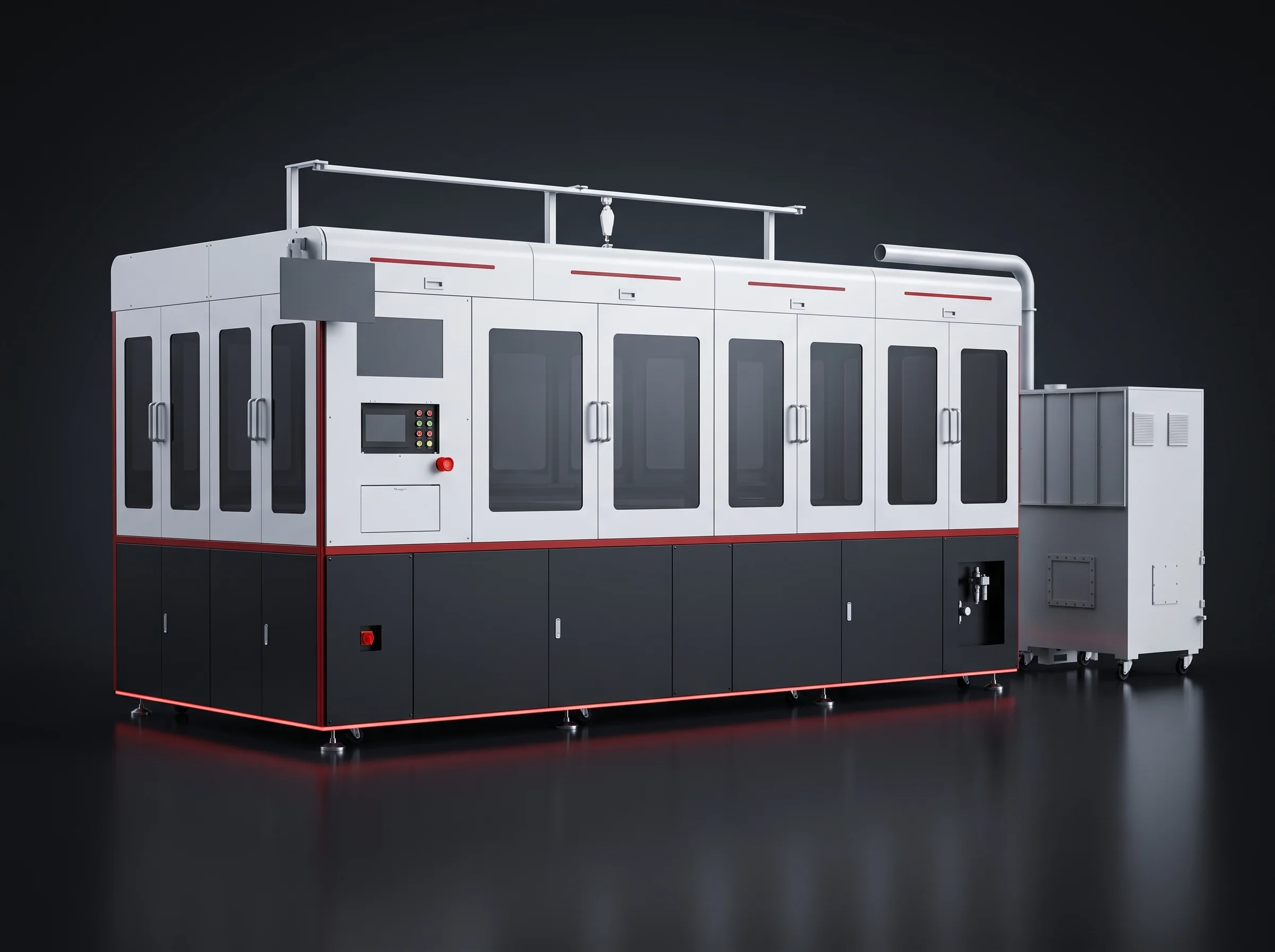
Battery cell compatibility & changeover tooling racked by part number beside a module assembly line

Second cell, second module

Battery Cell Compatibility & Changeover: Envelope and Hours

Battery cell compatibility & changeover are two halves of one answer: compatibility is stated as an envelope, and moving inside it is a changeover. Both halves are printed here — the range edges for the two tiers, the tooling each station changes, and the hours the line stands still.

≤1shift Within the range, to a type already qualified on your line: emptied, changed, re-zeroed, first articles sampled, back in production.
3–5days First introduction of a new type, first-article qualification and criteria sign-off counted in.

Module length envelopeMillimetres, both tiers on one axis

BLP-P8  300–1000
BLP-P8S / BLP-P15  400–1200
1P13S blueprint 978.4
300
400
1000
1200

The two tiers differ at both ends rather than by a margin: a 350 mm module clears BLP-P8 and misses the BLP-P8S floor; a 1,150 mm module clears BLP-P8S and sits above the BLP-P8 ceiling.

Envelope

Two Envelope Tiers, Three Axes

Battery cell compatibility & changeover both start from this table. Compatibility is stated per tier, in two columns, and a second type has to clear every axis that applies to the tier on order.

BLP-P8 is quoted against one set of ranges; BLP-P8S and BLP-P15 share the other. The tier decides which column binds you, which is why tier choice and compatibility are answered together rather than in sequence.

AxisBLP-P8BLP-P8S / BLP-P15
Cell envelopePrismaticStated against your cell drawingWidth 100–220 / height 100–220 / thickness 20–80 mm
Module envelopeThe binding axisLength 300–1000 × width 150–370 × height 100–240 mmLength 400–1200 × width 100–300 × height 100–250 mm
Pack envelopeEnclosureLength 600–1200 × width 300–800 × height 100–250 mmStated against your enclosure drawing
  • 350 mmClears BLP-P8 and sits below the BLP-P8S and BLP-P15 floor of 400 mm.
  • 1,150 mmClears BLP-P8S and BLP-P15 and sits above the BLP-P8 ceiling of 1,000 mm.
  • 978.4 mmThe blueprint 1P13S module both columns are built around, inside each of them.

Tier rates, footprint and headcount are on the pack line capacity planning page; the blueprint cell, module and pack the ranges are built around are on the energy storage pack line page.

Two drawings resolve the two columns into one line for your case.

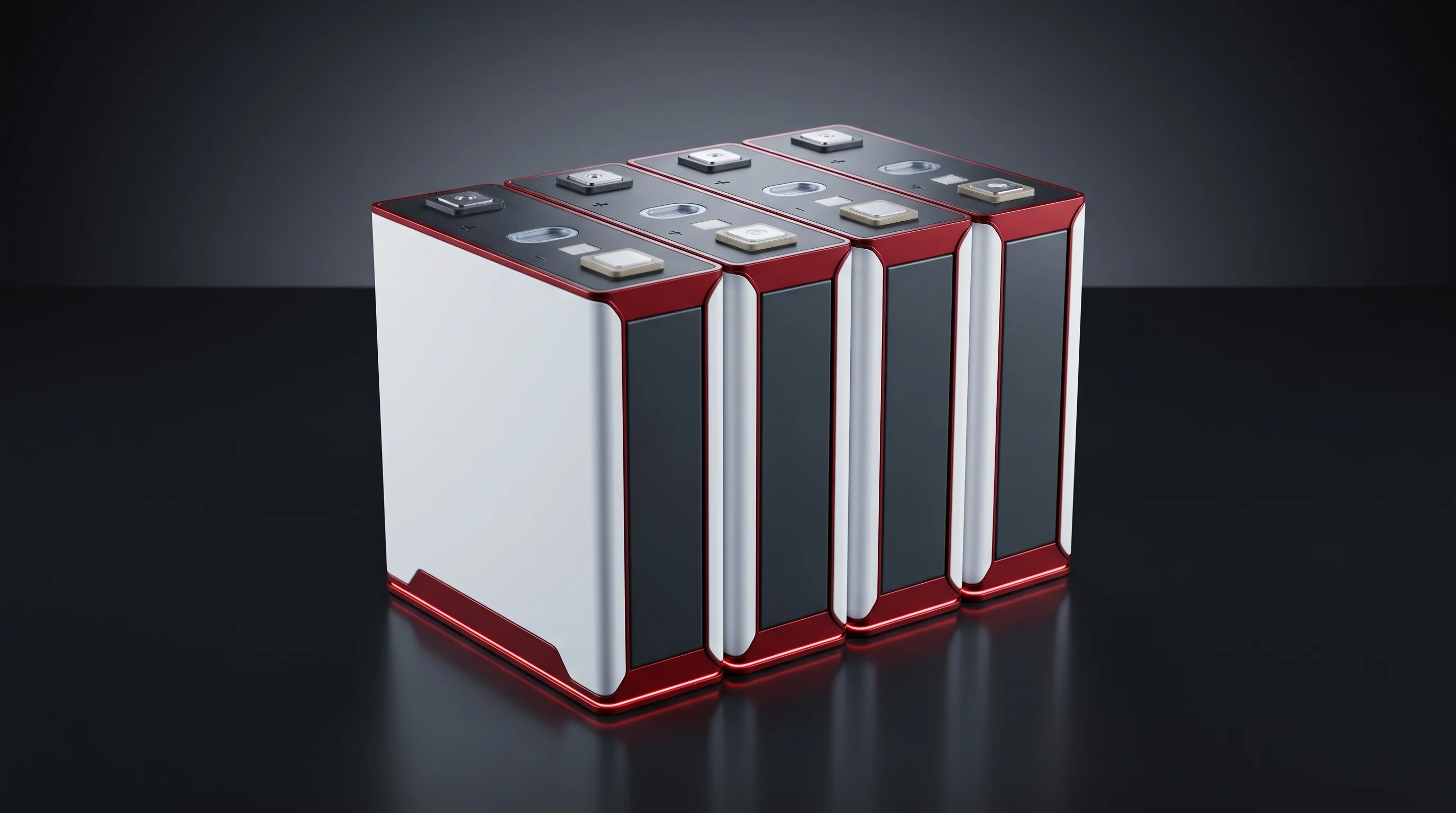
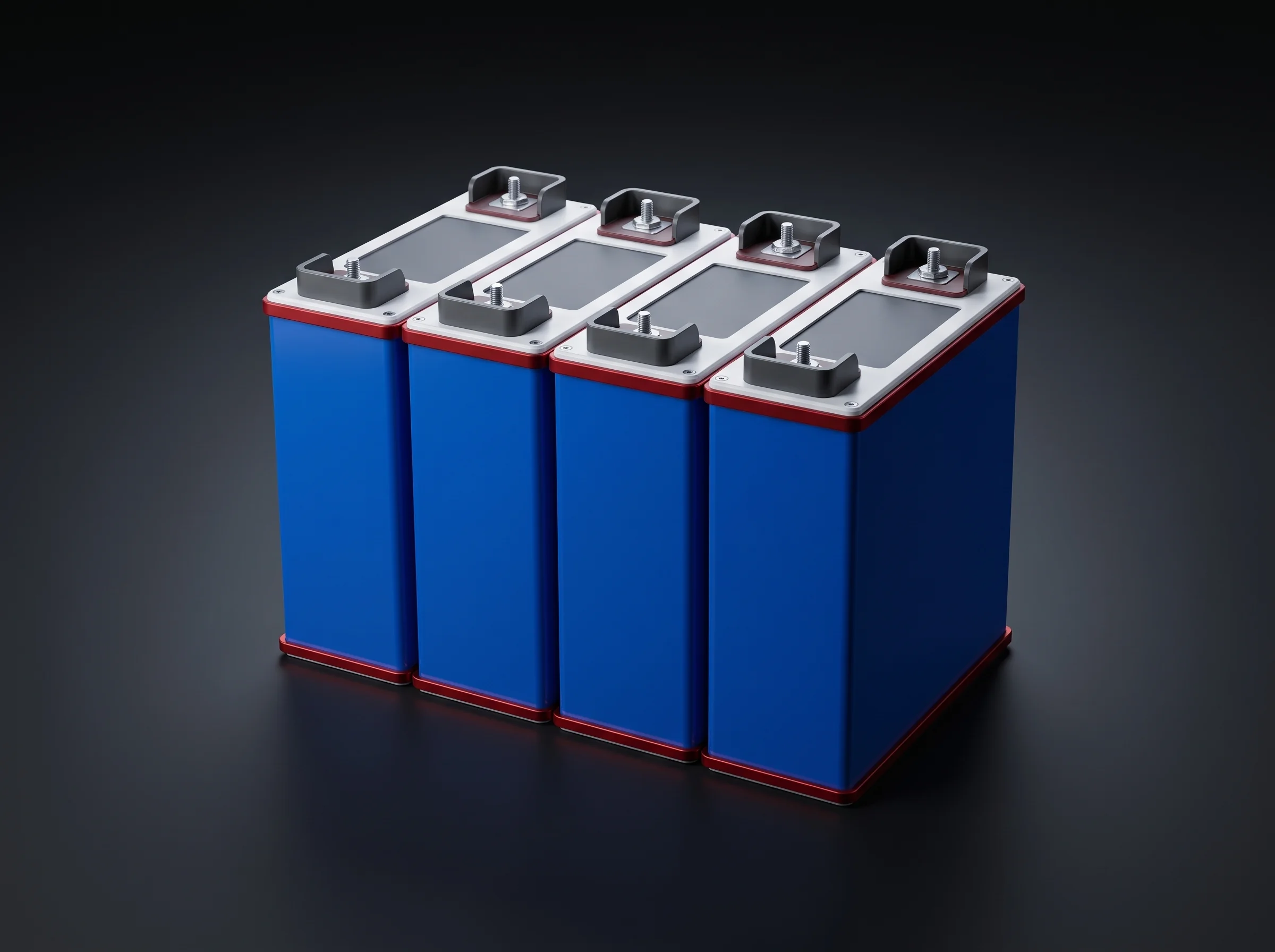
Row of prismatic battery cells graded by width, height and thickness
Cell axis — width, height and thickness are the three numbers the grippers and the sorting table are cut to.
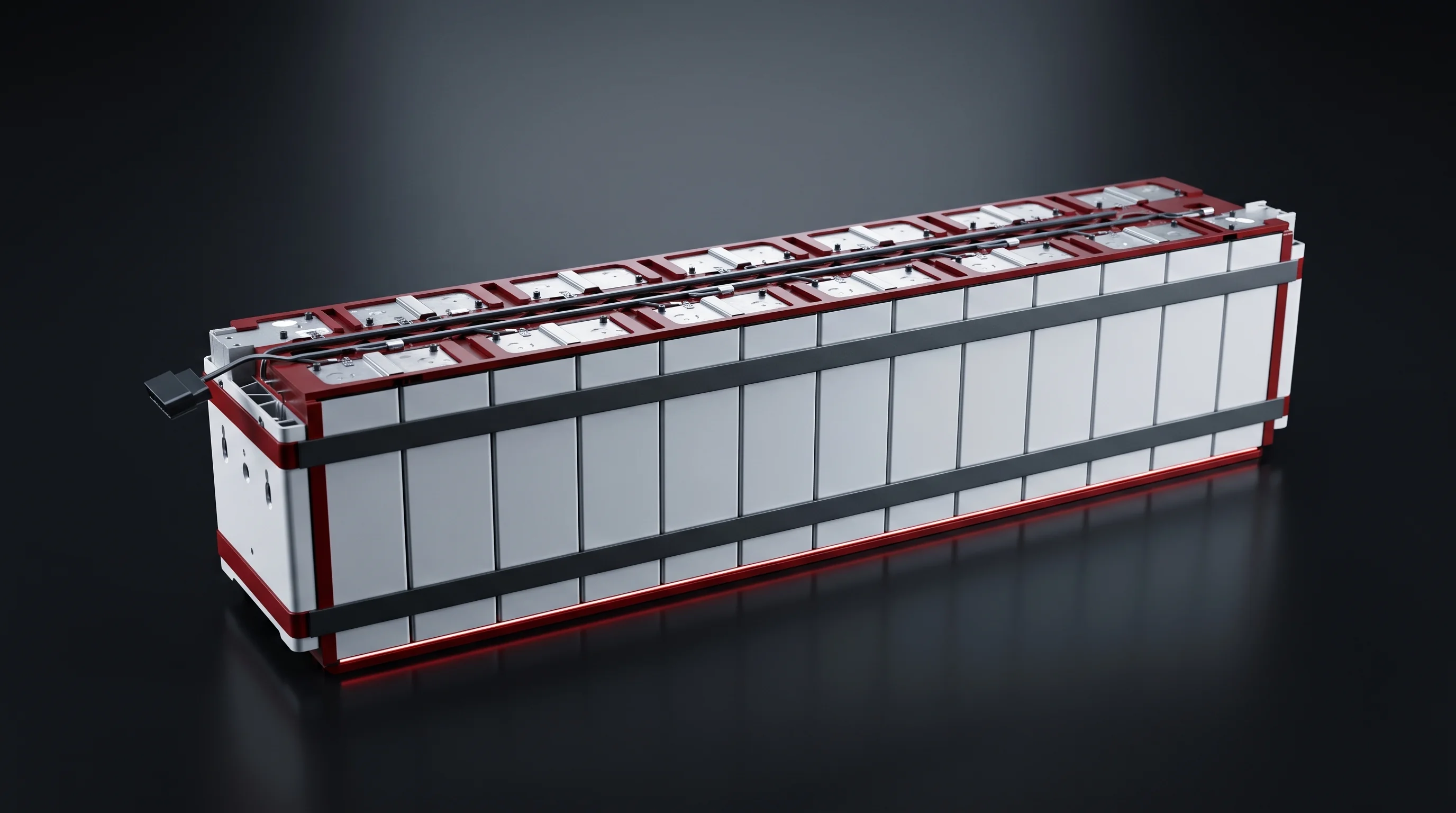
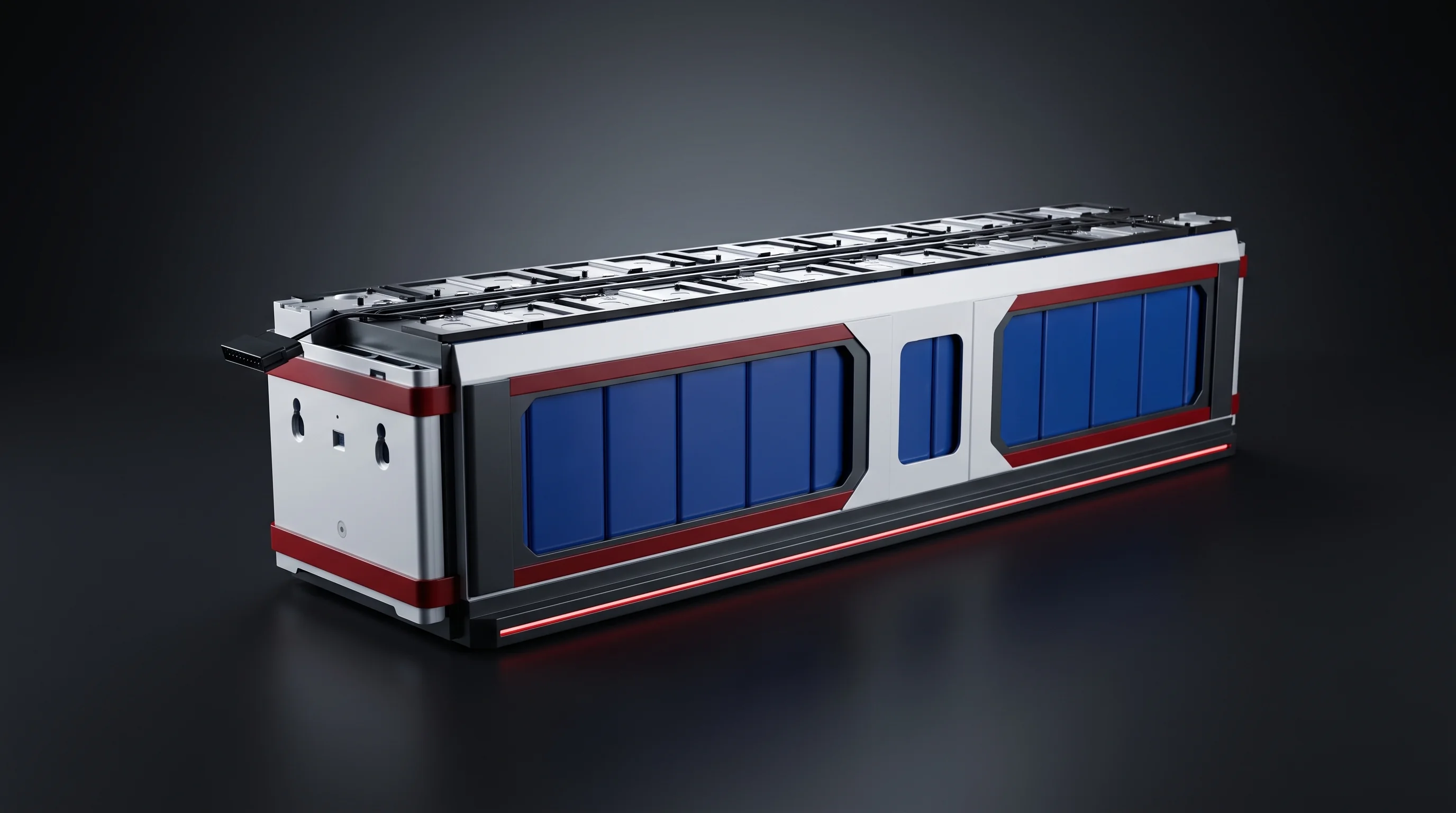
Assembled prismatic battery module with end plates and steel banding
Module axis — length is the axis that decides which of the two columns your line is quoted against.
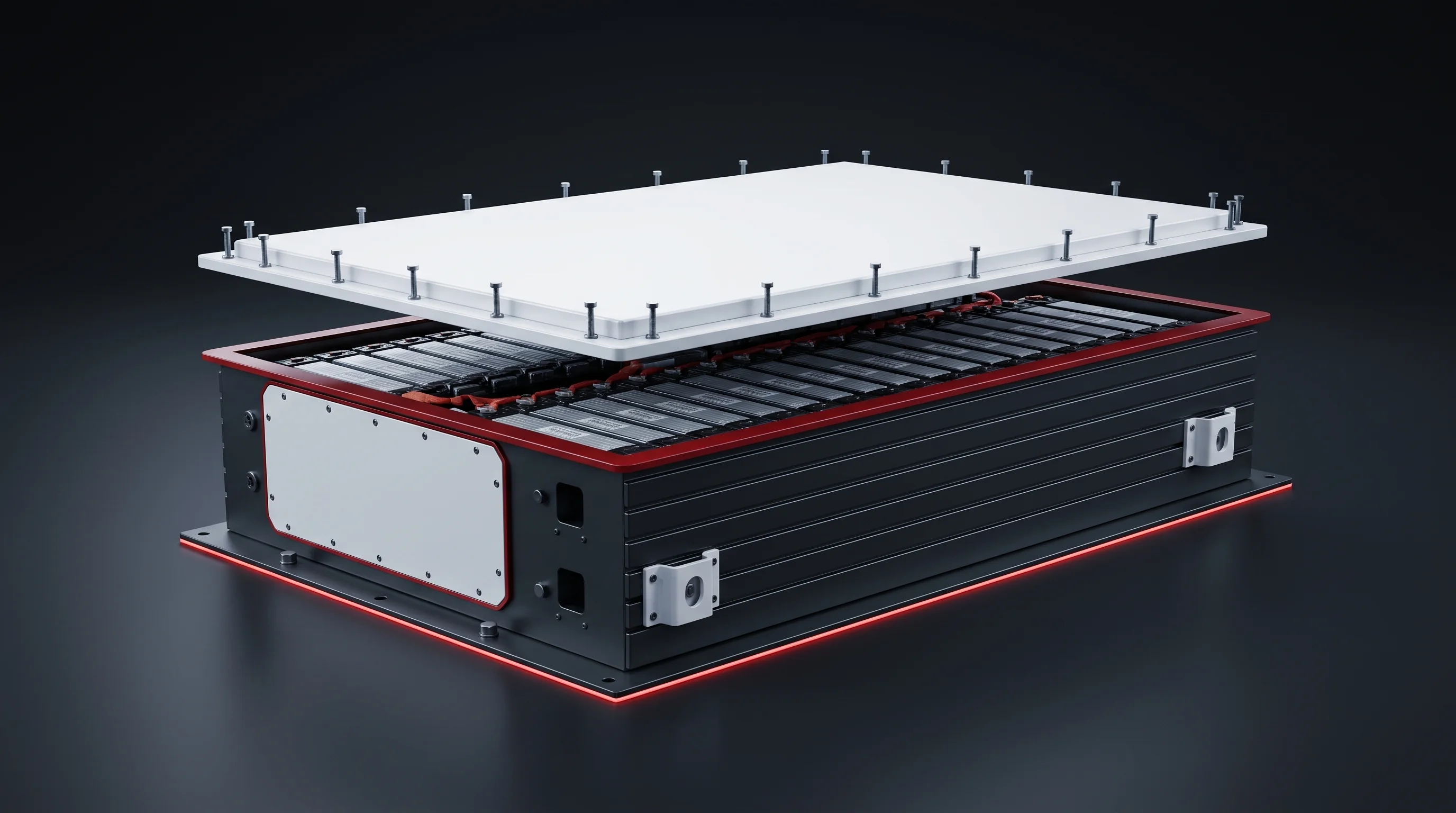
Battery pack enclosure with the lid lifted clear of the module bay
Pack axis — the enclosure the modules drop into, and the entry tooling cut for it.

What inside the envelope means

Same Stations, Different Tooling

Stays as it is

The station list and its order

  • The seventeen module stations and the fifteen pack stations build your type in the same order.
  • Takt stays where it was: the rate is counted as cells entering the module segment at loading.
  • The recipe format and the two signatures behind it are unchanged.
Cut to a point, not a range

Every fixture that touches the part

  • Fixtures are cut to a point rather than to a range, so two modules both inside one column still meet the line through different platens, carriers and entry tooling.
  • The stations that clamp, locate, present or seal the part carry part-specific tooling. The rest do not notice that the cell changed.
  • The envelope says the conversation is worth having; the hours table says what the move inside it costs.
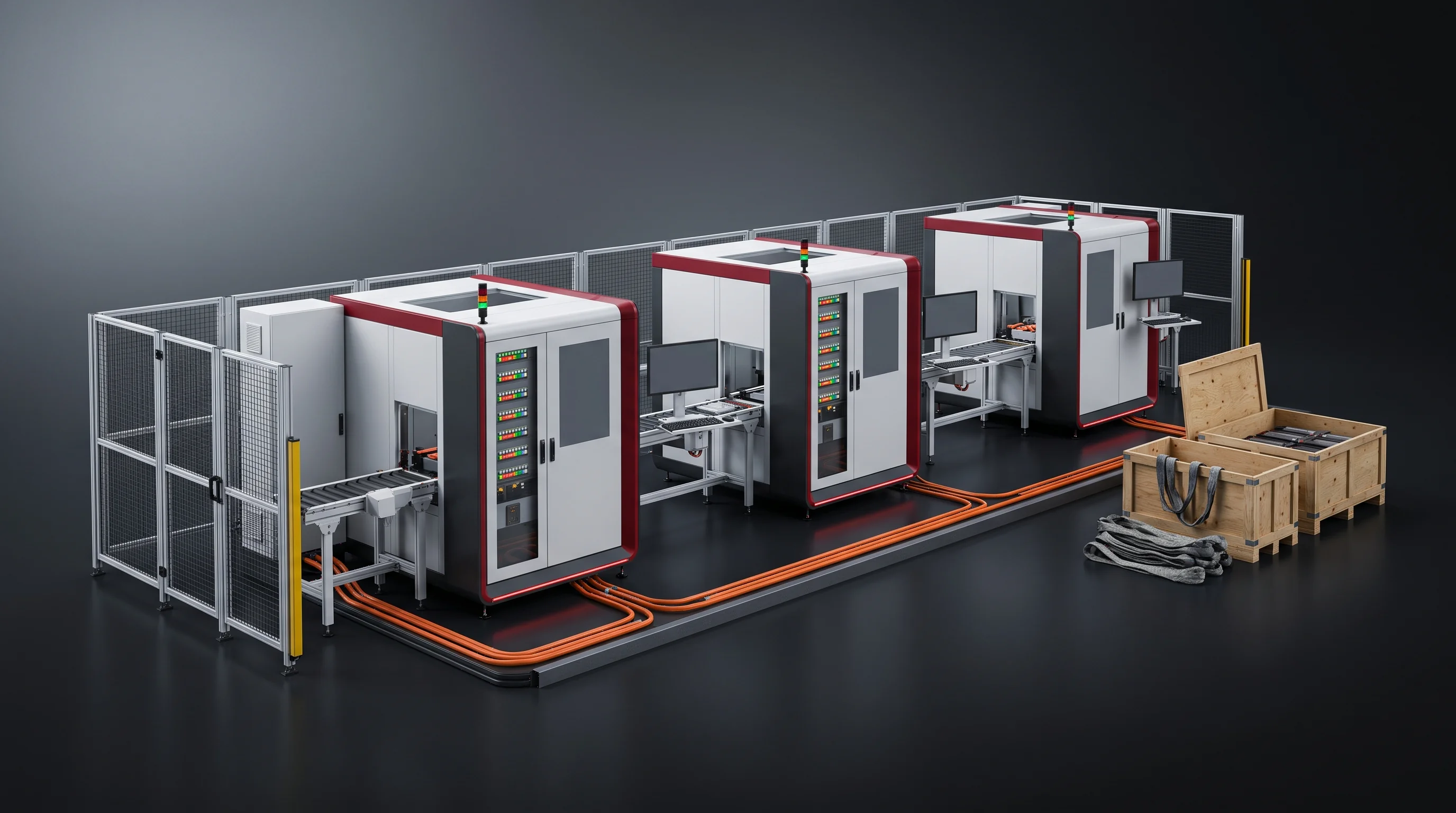
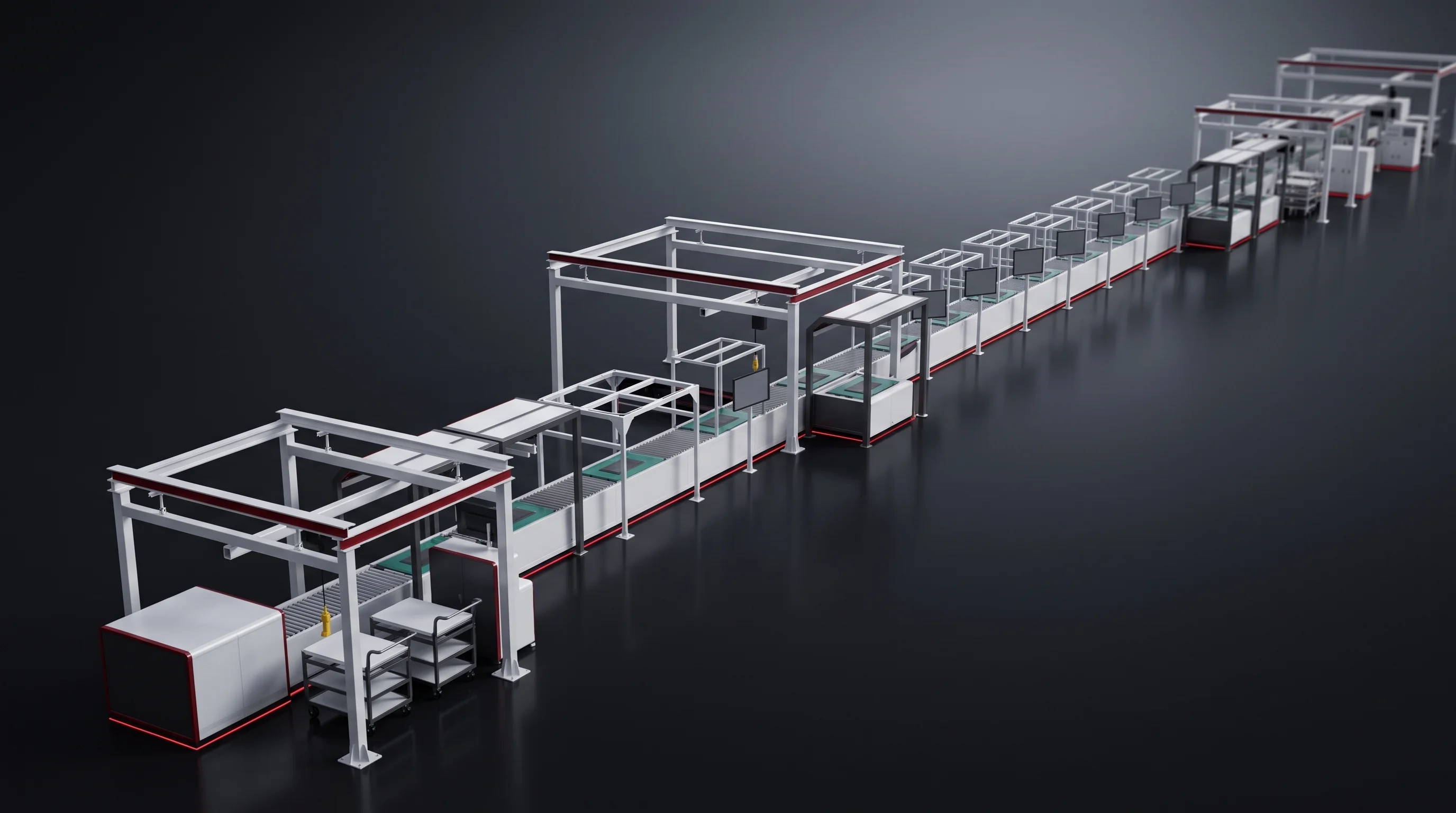
Module and pack assembly line seen end to end in station order
Thirty-two stations in a fixed order — a type inside the envelope is built by the same ones.
Battery module drawing showing the located faces a fixture is cut to
The located faces a platen and a carrier are cut to — a point on the drawing, not a range.

Order of work

The Changeover Day, In Order

Five things happen on a changeover day, always in this order, each waiting on the one before it. The red band is what the line is producing while they happen.

  1. 01

    Line empties

    Work in progress leaves before anything is unbolted, so the first hour belongs to your scheduling rather than to the equipment.

  2. 02

    Tooling comes off

    Station by station, a set of changes rather than one event. The count comes from your configuration.

  3. 03

    Datums re-established

    Locating fixtures are bolted and zeroed; vision stations are taught to the new pattern.

  4. 04

    First articles

    Parts are built and judged against the criteria for the new type before anything counts as production.

  5. 05

    Production resumes

    At the same takt as before, because takt is a property of the line and is counted at cell loading.

Cell loading and sorting segment of a battery module line standing empty
Step 01 — the loading end runs dry first, and the rest of the line drains behind it.
Module conveyor with pallet tooling between stations on a pack line
Step 05 — pallets carry the new type at the rate the line was bought at.

Standstill

Battery Cell Compatibility & Changeover Hours by Station

These are the hours we work to and quote against, for both kinds of change. The left column is a type your line has already qualified. The right column is the first time that type is seen.

StationChange within the range, to a qualified typeFirst introduction of a new type
Cell loading and sortingBLP-UL / BLP-CSRobot grippers cut to the cell face, tray program, sorting criteria table. ≤30minGripper and tray program switchover. 1shift (8 h)Gripper tooling plus a signed sorting criteria table.
Stacking, pressing and bandingBLP-SPPlatens, locating fixture, banding stops, and one stored press recipe. ≤2hPlatens, locating fixture and banding stops. 1shiftTooling, recipe and a first-article pressed-length qualification.
Terminal addressingBLP-ADVision taught to the terminal pattern; no hardware in most cases. ≤30minProgram recall. ≤4hVision teach and program.
Busbar weldingBLP-W6A recipe keyed to the part number; single-row and double-row modules run on the same station. ≤1hRecipe recall and a first-article sampling check. 1shiftOff-line first-article recipe with a coupon pull test at 1000 N or more.
Pack entry and fixing toolingPack segmentEntry fixture, module carriers, taught glue path, leak criteria. ≤2hTooling change. 1shiftTooling, glue path and leak criteria.
Whole line, within the rangeEmptied to runningStations changed in parallel by the shift crew while the line is empty. 1shiftChanged over and back in production. 3–5daysFirst-article qualification and criteria sign-off counted in.

The whole-line rows are not the sum of the station rows.

Within the range: parallel

The stations are changed in parallel by the shift crew while the line is empty, which is what puts the whole change inside one shift.

First introduction: queued

The stations queue behind each other, because the first article at one station is the input to the next. That queue, not the fitting, is what fills three to five working days.

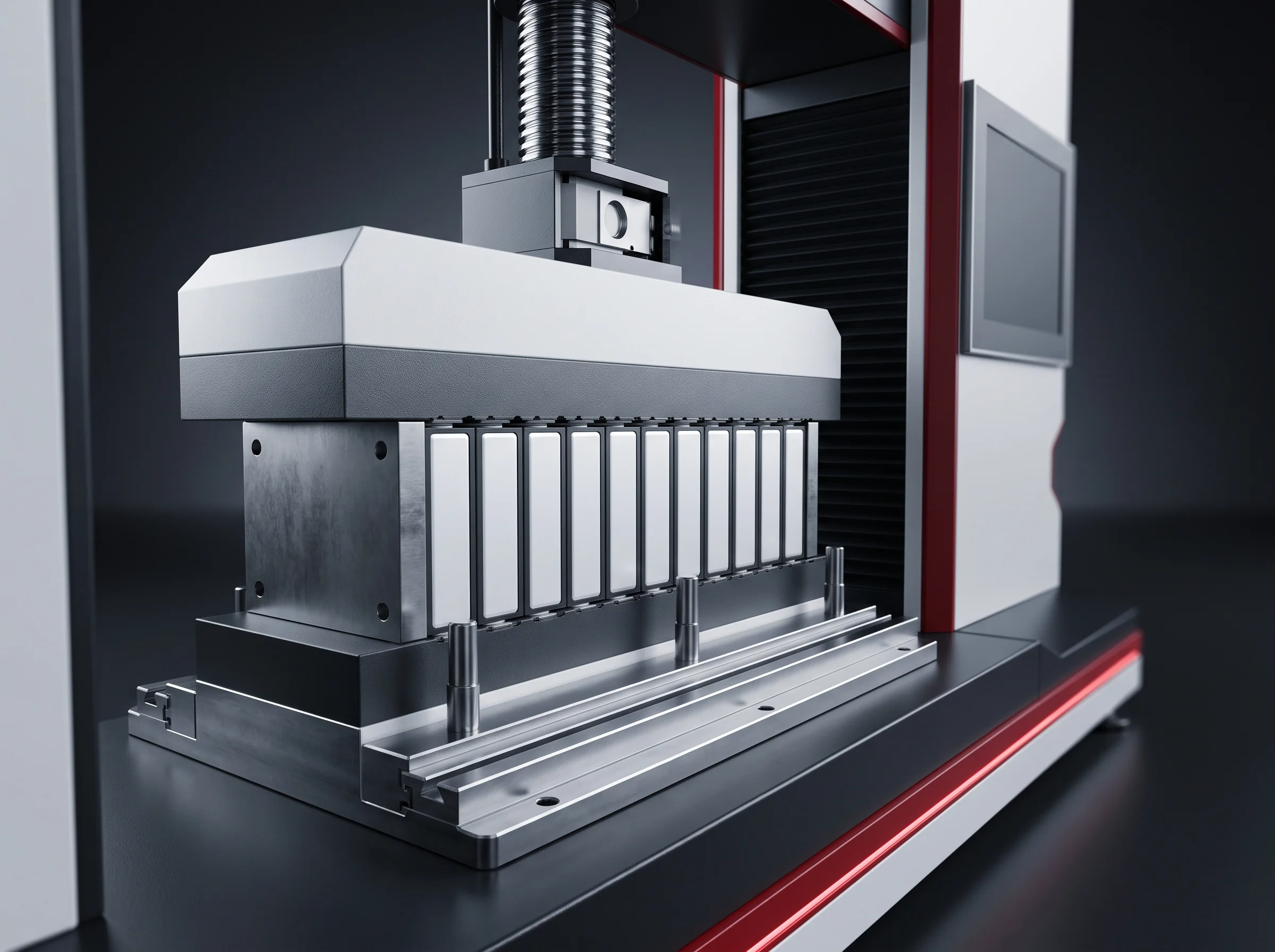
Module stacking and pressing station with platens and locating fixture
The two-hour rows are physical: platens and stops come off, go on and are zeroed.
Battery cell compatibility & changeover done: pack line running at full rate after the change
One shift later the line is running the second type at the rate it was bought at.

What sets each figure

Three Caps on the Clock

What caps each row is visible in the row itself: a recall, a hand job, or a signature.

  • 30min

    Recall

    A stored program or a stored recipe is selected and the station runs it. Nothing is unbolted.

  • 2h

    Physical

    Platens, locating fixtures, banding stops and entry tooling come off, go on and are zeroed. The hand time is what it is.

  • 8h

    Signature

    A first article carries a judgement made against criteria rather than a task carried out against a clock. That part cannot be compressed.

  • Not a sum

    Parallel, then queued

    Within the range the stations change in parallel. On a first introduction they queue, because one station's first article is the next one's input.

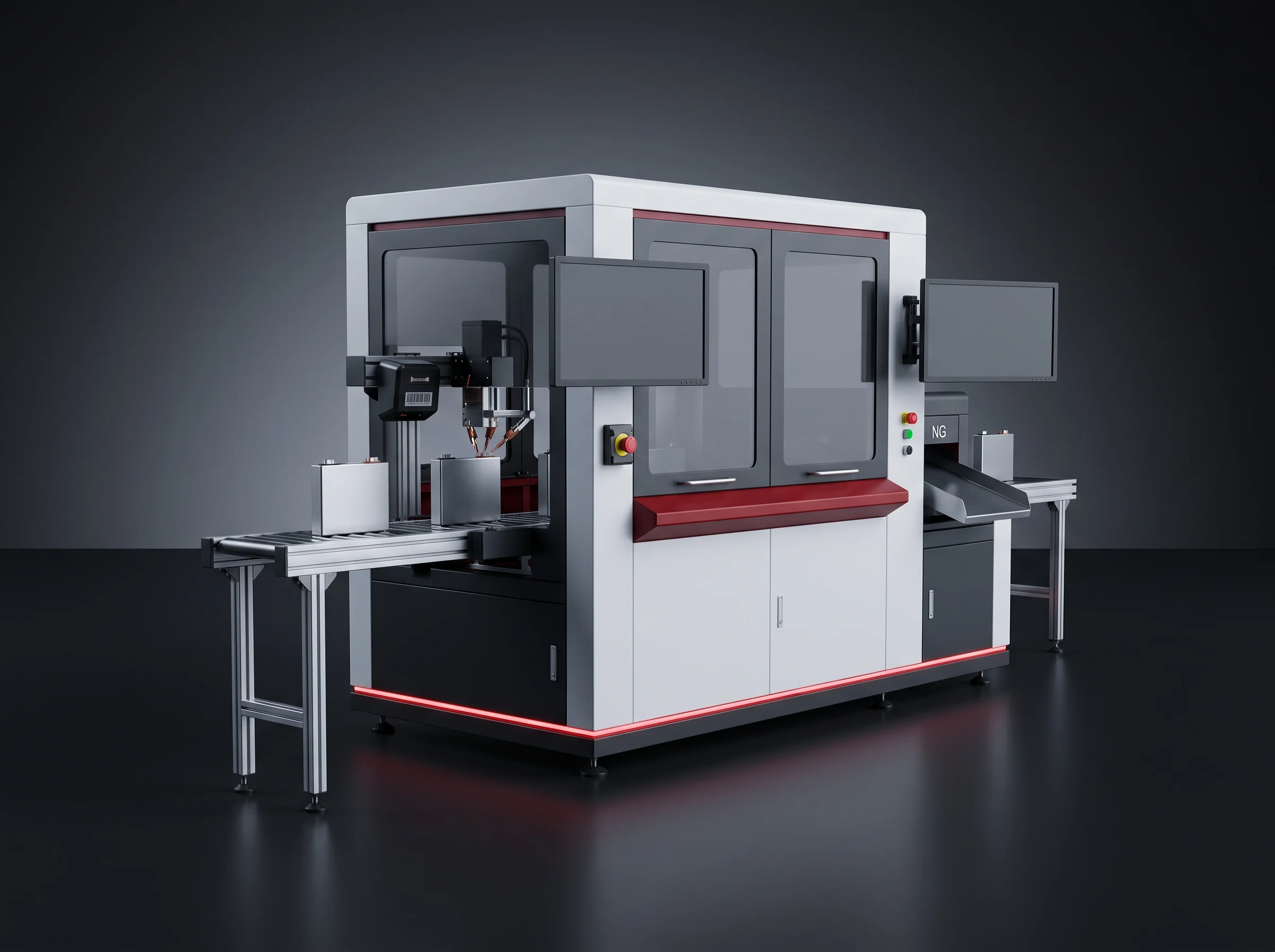
Cell scanning, testing and sorting station on a battery module line
Sorting bands and reject behaviour follow the new criteria table without further intervention.
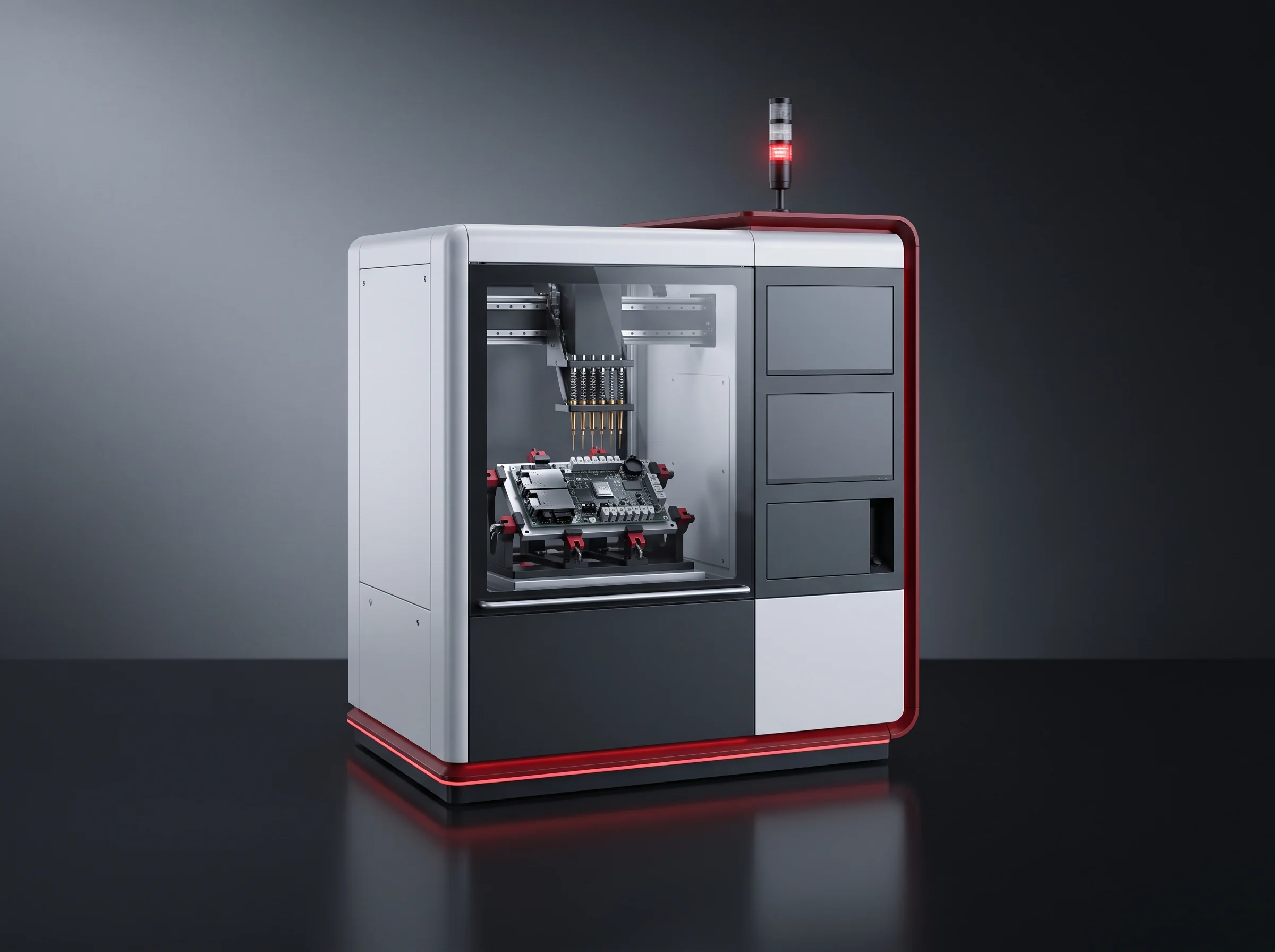
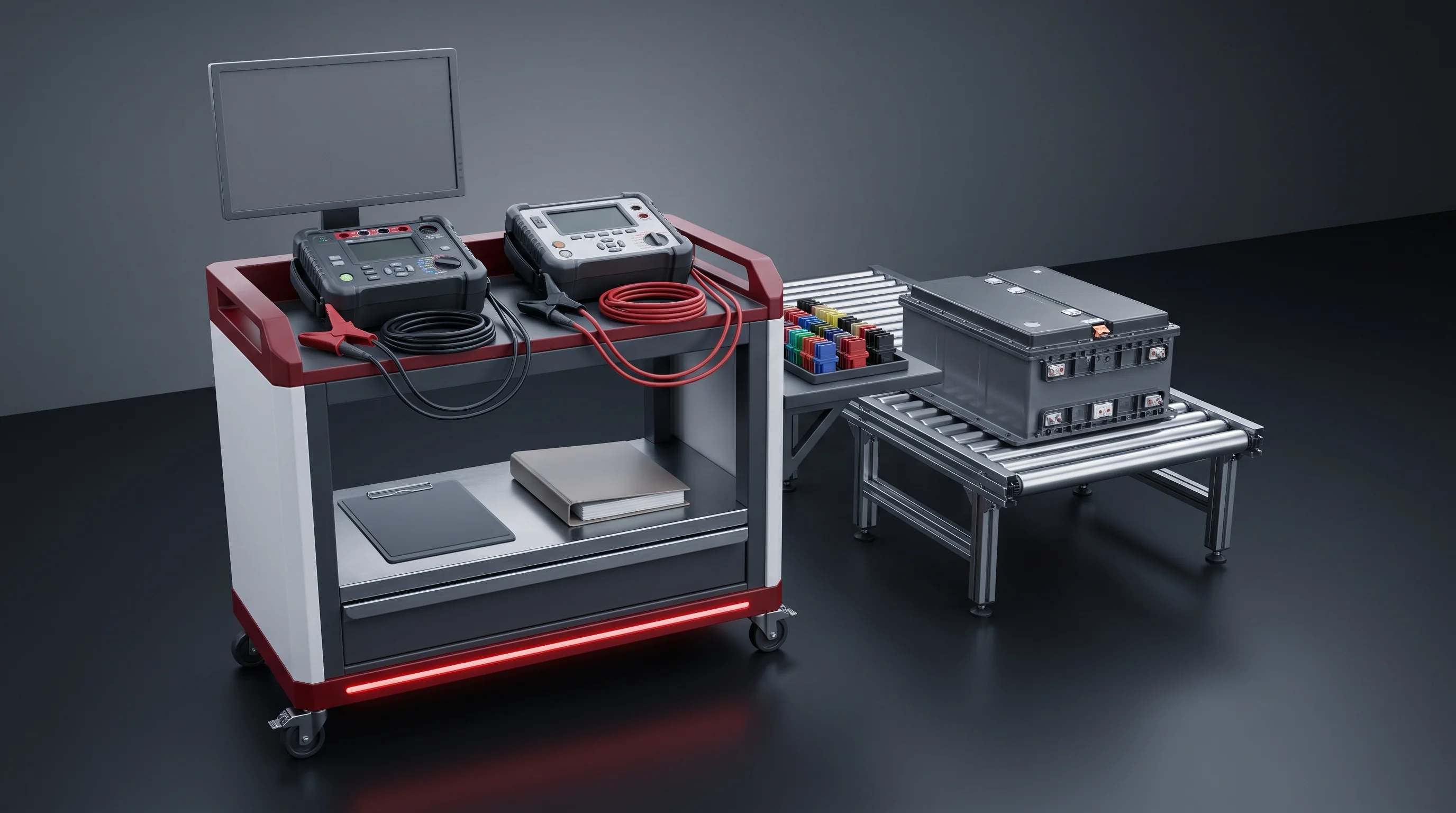
Module end-of-line test station measuring insulation and withstand voltage
End of line judges the first article against the criteria for the type, not against the clock.

Changed over and back in production inside one shift

Within the range, to a type already qualified on your line.

Two states of knowledge

Two Kinds of Battery Cell Compatibility & Changeover

The two columns of the table describe the same physical work under two different states of knowledge.

Platen and locating fixture stored on a rack beside the pressing station A selection job

Change within the range

Fixture
Exists for that type and goes back on.
Recipe
Stored under its part number and recalled rather than written.
Criteria
Agreed when the type was introduced, so the check is a sampling check.
Set of prismatic cells of a new format arriving for qualification A qualification job

First introduction

Fixture
Cut for the new envelope, and it stays with the line afterwards.
Recipe
Written by the process engineer who sets the parameters, signed by quality.
Criteria
Agreed in writing and added to the acceptance set for that type.

The second time is a different job

Not because anyone got faster with practice. That is the whole of battery cell compatibility & changeover on a qualified type: the first changeover leaves three things behind, and every later change to that type consumes them.

  • A fixture cut to that envelope, racked under its part number.
  • A recipe stored under the same part number, selected rather than rewritten.
  • A signed criteria table in the acceptance set. How criteria are written, signed and re-run is on the FAT and SAT acceptance page.

Station by station

Tooling Changed at Each Station

Five places on the line carry part-specific tooling. Each one changes as hardware, as a recipe, or as both.

The rest of the thirty-two stations convey, clean, tape, tighten and inspect, and do not notice that the cell changed.

BLP-UL / BLP-CS

Cell loading and sorting

Hardware + table

Grippers are cut to the cell face and the tray program is written for the tray the new cell arrives in.

  • Behind them the criteria table changes: the voltage and internal resistance bands the new type is graded into, and what happens to a cell outside them.
  • Reject and gap-refill behaviour then follows the new table without further intervention.
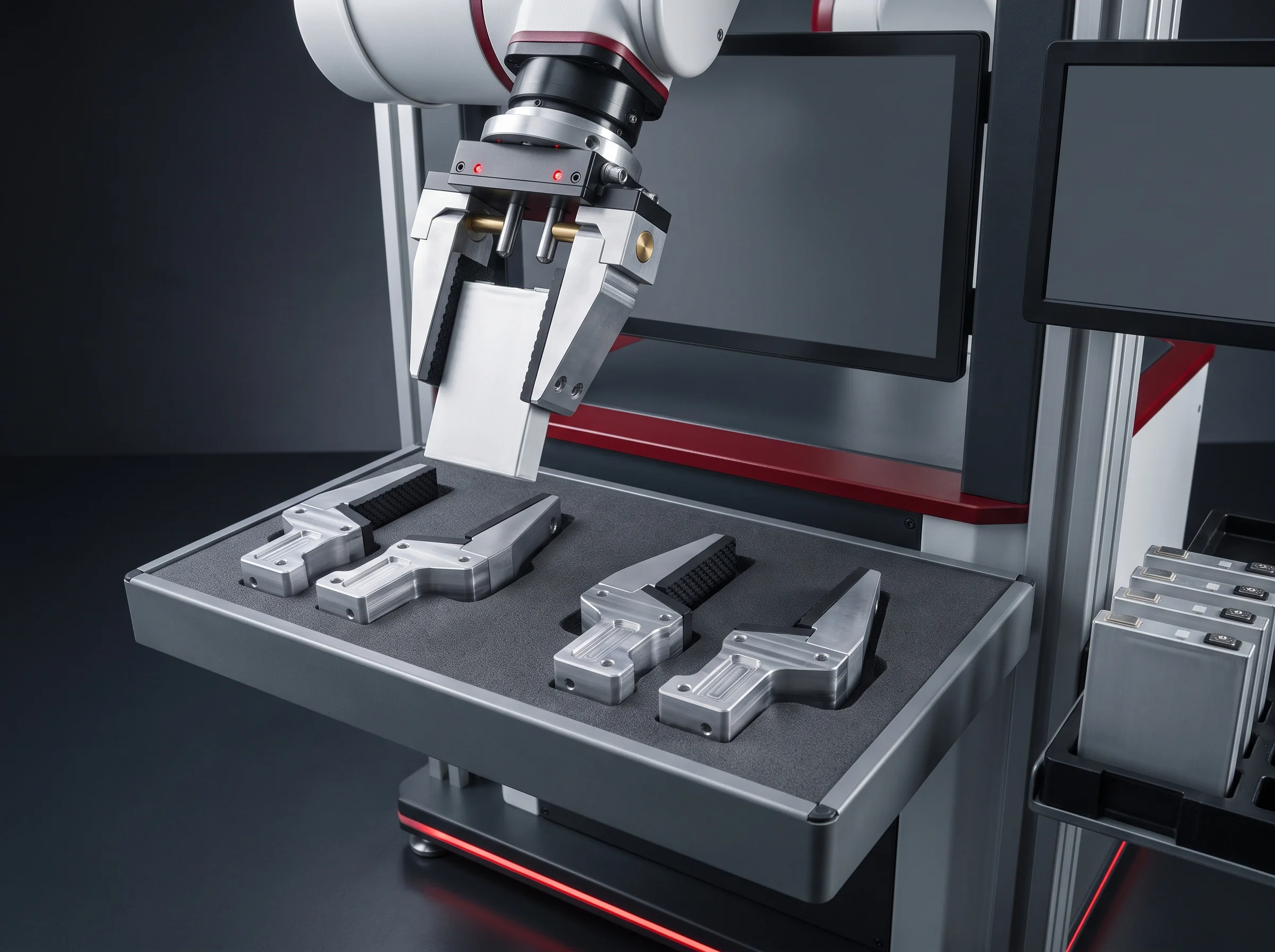
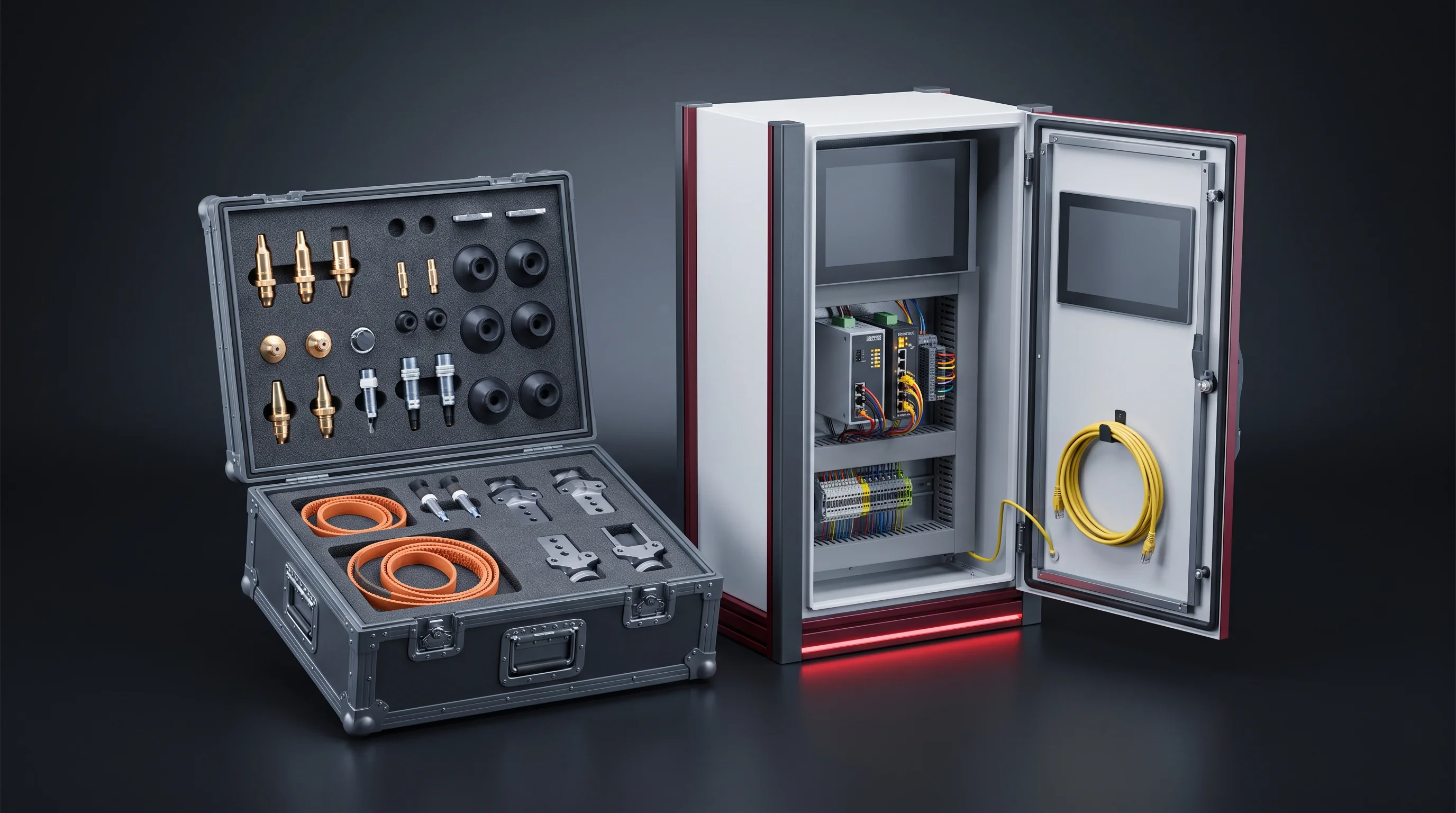
Robot gripper set cut to the cell face, stored beside the cell unloading station
BLP-SP

Stacking and pressing

Hardware + recipe

Platens, locating fixture and banding stops are cut for a module family. The recipe holding target force, dwell, target length and banding passes is stored per module type, and operators select it rather than edit it.

Platen and locating fixture bolted onto the module pressing station
BLP-AD

Terminal addressing

Recipe only

Addressing usually changes without hardware: the vision is taught to the terminal pattern of the new module and the program is stored under that type.

  • The station then holds its addressing accuracy of 0.2 mm or better against the taught pattern rather than against a remembered one.
Terminal addressing and polarity station with vision head over a module
BLP-W6

Busbar welding

Recipe only

Welding changes as a recipe keyed to the part number, because what the station welds is a busbar geometry rather than a cell. Single-row and double-row modules share the station.

  • Where that recipe comes from is the next section. The joint criteria it is written to are on the busbar welding station page.
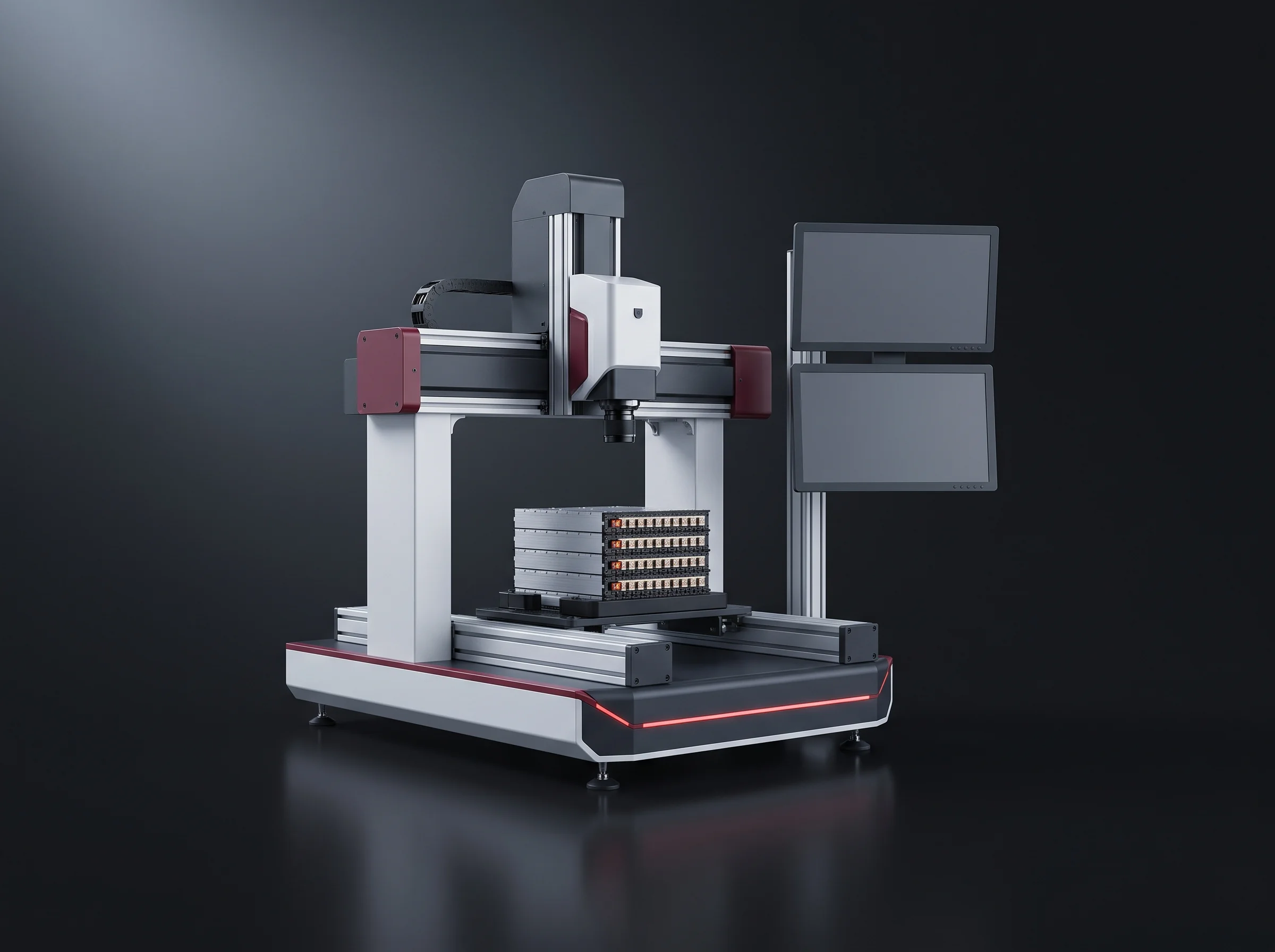
Gantry laser welding head over a busbar joint on a battery module
Pack segment

Pack entry and fixing

Hardware set

Entry and fixing change as a set: the fixture that seats the module into the enclosure, the carriers that present it, the glue path taught for the new cooling plate and floor, and the leak criteria the enclosure is judged against.

  • All four are quoted as their own items against the enclosure part number.
Pack entry fixture seating a module into the enclosure on the pack segment

Two drawings

Your Two Drawings, One Answer

Against the cell you run and the one you expect to run, the table above resolves into a station list, a datum answer and a tooling quotation for your case.

Send both drawings
Stations carrying tooling Shared datum scheme Changeover hours for your two types Tooling quoted as its own item

Where a new recipe comes from

The First Article Recipe Path

Welding recipes are stored per part number and written once. The route a new one travels is what keeps a busbar change down to an hour on changeover day.

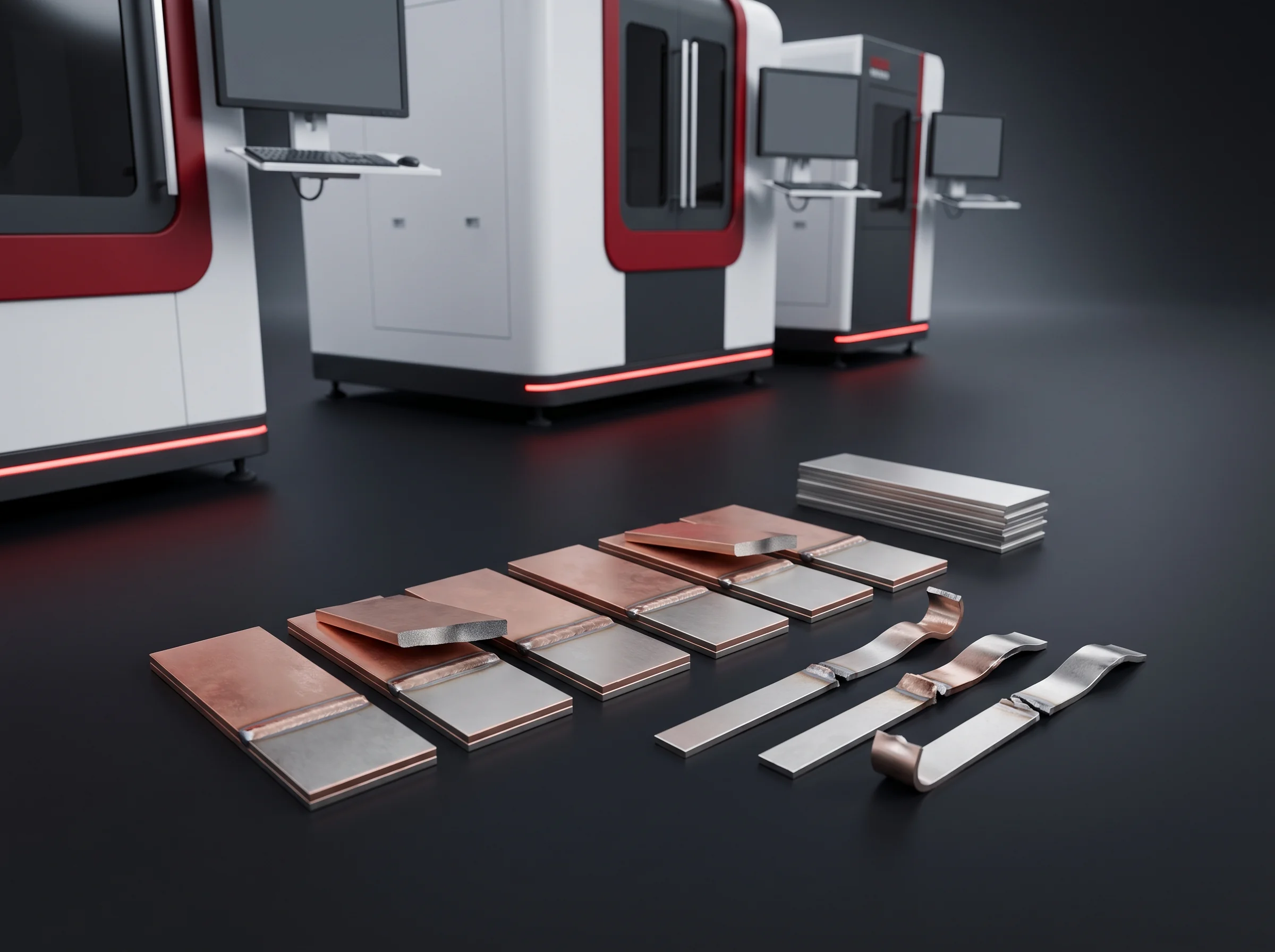
Off-line gantry laser welding machine with its own clamping table 01

Written off the line

A new busbar geometry gets its first recipe on the off-line gantry machine, so recipe development and production never compete for the same station.

  • The line keeps running the current type meanwhile.
  • The gantry laser welding machine is a standalone machine with its own table; this is one of the jobs it exists for.
Welded coupons laid out for pull testing after recipe development 02

Judged on real joints

The recipe is judged on coupons, not on a parameter screen.

  • Penetration 1.0 mm or more.
  • Weld width 1.5 mm or more.
  • Coupons pull tested to 1000 N or more before the recipe is called finished.
Top view of prismatic cells showing the terminal layout a busbar is welded to 03

Into the line unchanged

When the coupon passes, the recipe moves into the in-line BLP-W6 unchanged.

  • Same format, same part number, same two signatures.
  • Nothing is re-tuned at the line: a recipe re-tuned at the line is a second recipe no coupon was ever pulled against.

Three things follow from that for your line.

  • A new type reaches changeover day already carrying a qualified recipe — which is why the busbar row is a one-hour recall within the range.
  • Rework and repair welds run to the recipe stored under the original part number, so a repaired module is welded to the parameters its type was qualified at.
  • The recipe set you hold at handover is a list of part numbers with signatures against them, which is the same list your operators select from.

After restart

Restart and Takt

Takt does not move with the cell. The rate is counted as cells entering the module segment at loading, and it belongs to the line configuration rather than to the type running on it.

  • 4–8PPM · BLP-P8S, before and after a changeover alike
  • 8PPM · BLP-P8, counted at the feeding point
  • 12–15PPM · BLP-P15, the rate the line was bought at

Back to the rate you had

A changeover returns you to the rate you had, not to a rate discounted for the new type. The tier figures behind that are on the pack line capacity planning page.

Restart is judged on first articlesAgainst the criteria for the type, not on the clock.
  • If a first article fails, the station that produced it is corrected and its first article re-run.
  • Only that station repeats. The stations already signed off stay signed off.
Battery module line running at its rated takt after a changeover
The rate is counted where cells enter the module segment, not at the station that changed.
Finished battery pack leaving the line after end-of-line testing
The second type leaves at the same output the first one did.

Large format

587 Ah on the Roadmap

Roadmap item, not a quoted capability

Today's qualified boundary is the envelope table above: prismatic cells inside those ranges, on the tier you buy. Large-format 587 Ah cells are a roadmap item for the BLP-P8 tier — we are working toward them rather than quoting a line against them today.

If your programme is heading there, send the cell drawing now and have it assessed as a first introduction rather than as a compatibility question.

What comes backConcrete, against that envelope rather than against the published ranges.
  • Which stations would need tooling cut new against that envelope.
  • Which would be a program and a teach rather than hardware.
  • What the first-article path looks like for the busbar geometry that cell brings with it.
  • Which parts of your line as configured would carry it unchanged.

Worth having while the first fixture set is still a drawing: a fixture designed with a second envelope in view is the same job with better information.

Large format prismatic cells stood on end for dimensional checking
Larger formats change the envelope on every axis at once, which is why they are assessed as an introduction.
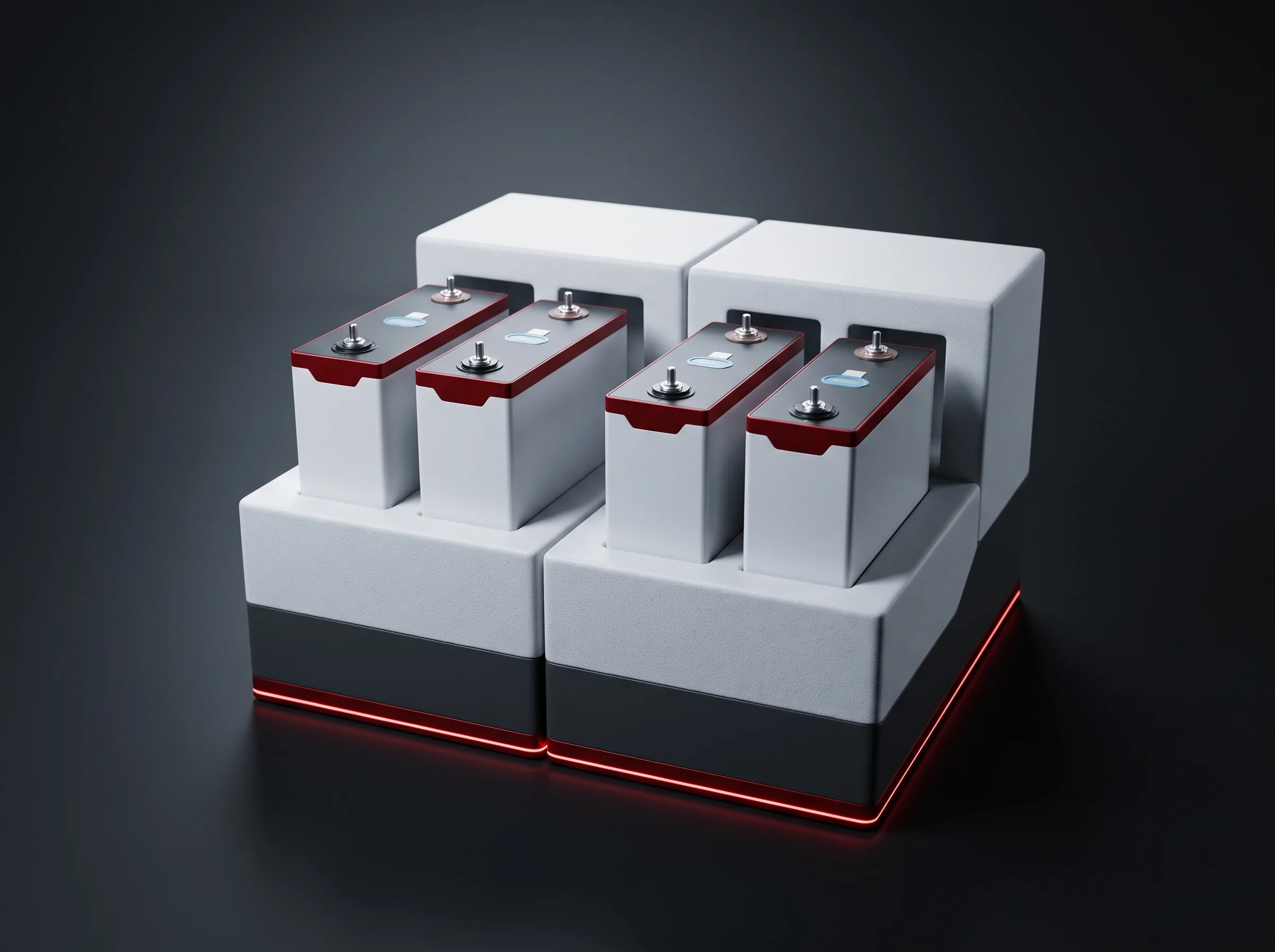
Prismatic cells of the currently qualified format ready for loading
The qualified boundary today: prismatic cells inside the published ranges on the tier you buy.

How tooling is quoted

Tooling Quoted Per Part Number

Tooling is quoted as its own item, keyed to the part number, station by station. What you receive is a list rather than a lump.

  • The stations on your configuration that carry part-specific tooling, and what the item is at each one.
  • The same list again for the second type, the day a second type is named.
  • Items you can read, compare against your own numbers, order with the line, or order later when the second programme confirms.

Folded into a line total it becomes a number nobody can take apart, and the question of what the second type takes only reappears on the day it arrives.

One part number, three records

The fixture

A tooling item on a quotation, cut to that type.

The recipe

Selected by an operator on the panel, never edited.

The criteria table

Signed by a quality engineer and held in the acceptance set.

Three views of the same type rather than three separate records — which is also what makes the left column of the hours table repeatable: the tooling that comes back on is the tooling the recipe was written against.

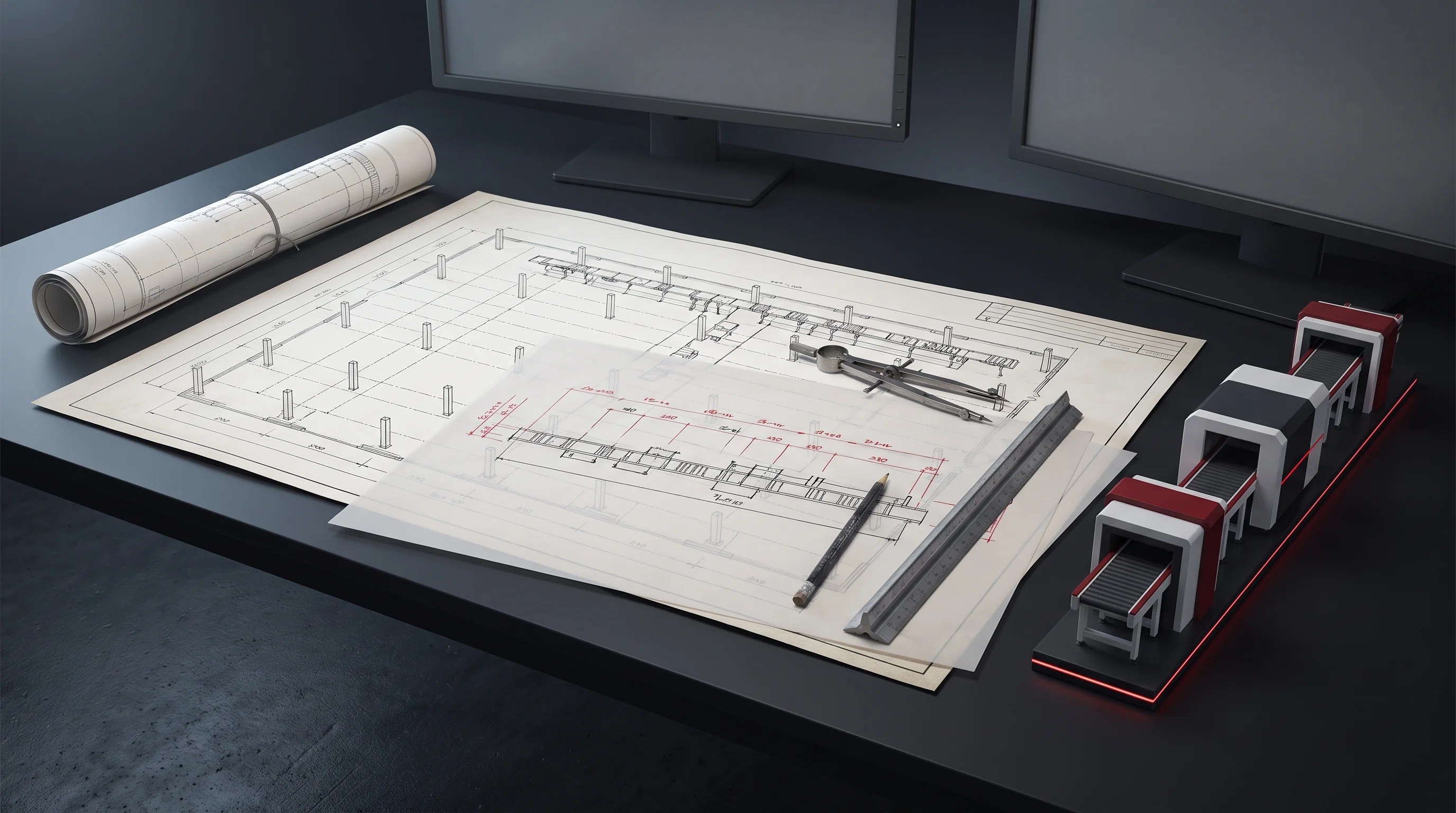
Engineering desk with layout drawings and a tooling list under review
The tooling list arrives as its own item, station by station, alongside the layout.

Named before handover

The Second Model During the Project

When a second type is named while the line is still being built, four things change in how we build it. All four are cheaper as decisions than as retrofits.

Pre-assembly bay with a line set up and powered before shipment Datum scheme

One datum scheme for both

Fixtures are designed to a shared datum scheme wherever both envelopes allow it, so the second changeover is a teach rather than a re-engineering job.

Module drawing set open with a second envelope marked alongside the first Tooling

The first tooling set knows about the second

It is cut knowing the second envelope exists, which is the same work with the second drawing on the desk rather than a second job later.

Acceptance bench where criteria tables are run and countersigned Criteria

Both criteria tables signed at acceptance

Written and signed during acceptance rather than afterwards, so the second type arrives already carrying the document its first articles will be judged against.

Engineering floor where welding recipes are written and countersigned Recipes

Both recipes stored before handover

Stored under their part numbers before the line ships, so the second type is a selection on the operator panel from day one.

ItemSecond type named during the projectSecond type named after handover
Datum schemeShared where both envelopes allow it; the second changeover is a teachSecond fixture set designed to a datum it was never drawn against
Tooling setFirst set cut with the second drawing on the deskSecond set cut as a fresh job while the line is already running
Criteria tablesBoth signed at acceptance, in the same setSecond table written and signed on its own visit
RecipesBoth stored under their part numbers before shipmentSecond recipe written off-line later, then moved in
Hours on the day the second type arrives≤1 shift a change within the range3–5 days a first introduction

Who holds what

Training Split by Role

OperatorsSelect recipes, release parts and handle held parts.
Process engineersWrite recipes, read curves and run first articles.
MaintenanceWear parts and the remote diagnostics link.

Training runs on your own line during site acceptance, on both types named in the project. At handover the three roles hold the same three lists: the recipe list operators select from, the criteria set process engineers judge against, and the spares list maintenance orders from.

Spare parts shelving and the remote diagnostics link beside a control cabinet
Wear parts ship within 48 hours and remote diagnostics is available on the line. The engineering group behind it is 26 engineers working out of a 6,000 m² assembly hall — more on the about page.

Before the quotation

Drawing Set for Battery Cell Compatibility & Changeover

Five items, and a sentence about when the second type is expected. A fixture designed against a second envelope in view is a different fixture from one designed against silence.

  1. The drawing or datasheet for the cell you run today.
  2. The same for the cell you expect to run — a draft is genuinely useful here.
  3. The module configuration, with series and parallel count and the finished length.
  4. The pack configuration and the enclosure it goes into.
  5. The target takt, counted as cells entering the module segment.
Within 24 hoursYour case rather than the published table.
  • The stations on your configuration that carry part-specific tooling.
  • Whether both types can share a datum scheme.
  • The changeover hours for your two types, set against the rows above.
  • The tooling for the second type quoted as its own item.
Two cell drawings compared for battery cell compatibility & changeover against a line layout
Two drawings on the desk at once is what turns a compatibility question into a tooling list.
Module and pack line configuration used to count the stations carrying tooling
The station count comes from your configuration, not from the published station list.

Before deciding

A Bay Set to Your Configuration

Send the cell drawings, the module and pack configuration and the target takt ahead of a visit, and one of the three pre-assembly bays is set to your configuration and powered up when you arrive.

  • The stations that carry your tooling, running the parts they were cut for.
  • A changeover walked through in the order of the five steps above.
  • If travel is not workable, the same criteria table run on video with the same engineers on the call.
Pre-assembly bay powered up with a line set to a customer configuration
One of three bays, set to your configuration.
Acceptance bench where the criteria table is run item by item
The same criteria table, run item by item.

How to reach you

[email protected]

Start a project

Battery Cell Compatibility & Changeover Enquiry

More than 40 line segments have been built for plants in 12 countries — whole lines, single stations and segment retrofits — and the same compatibility and changeover documents come with all three. The company holds ISO 9001, CE and RoHS. Send both cell drawings and your configuration and the reply covers the station list, the datum answer and the tooling quotation within 24 hours. You can also start on the contact page.

Phone / WhatsApp
Address
Wuhan, Hubei, China
Response
Within 24 hours