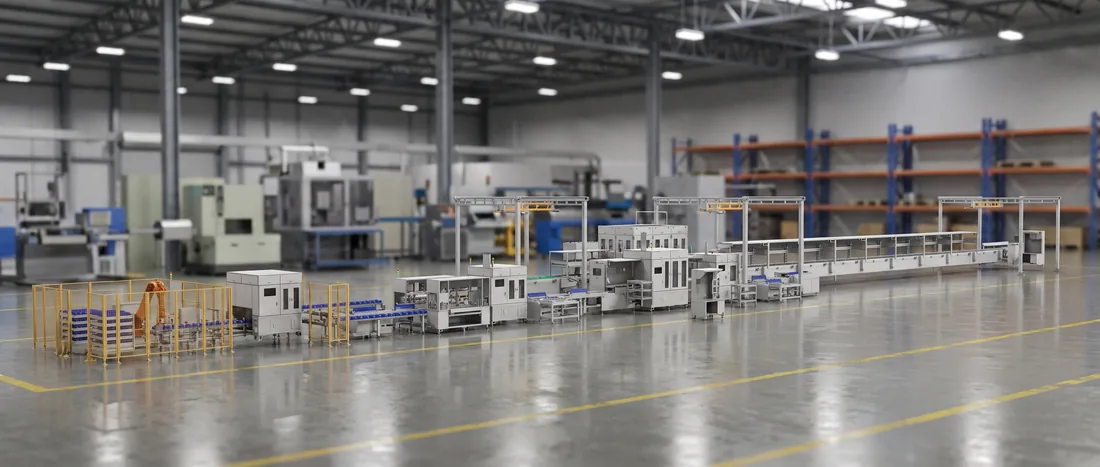
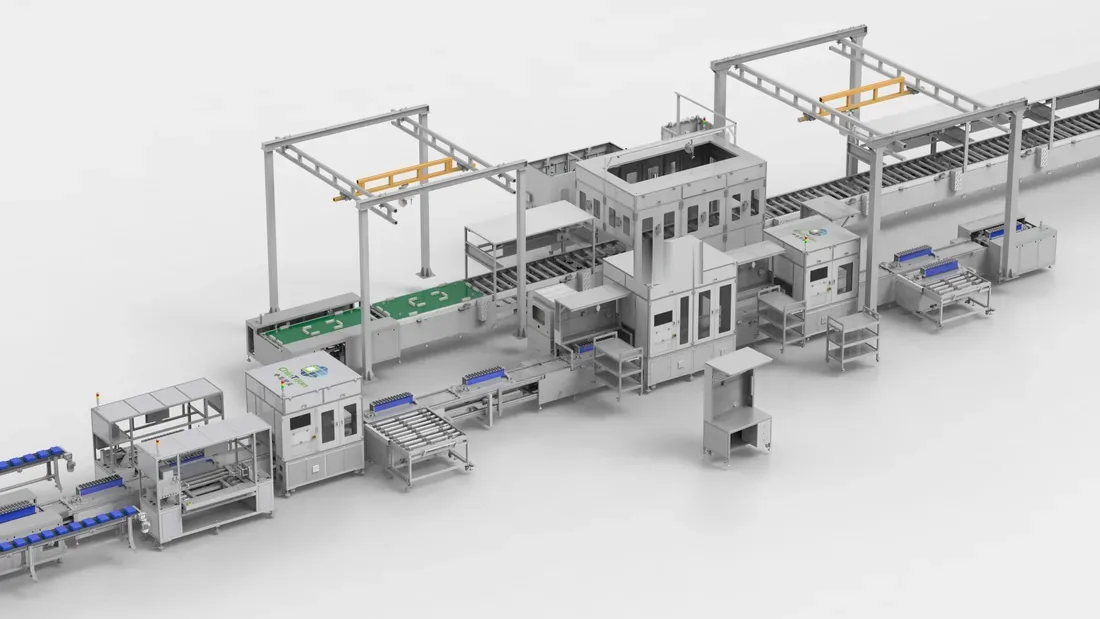
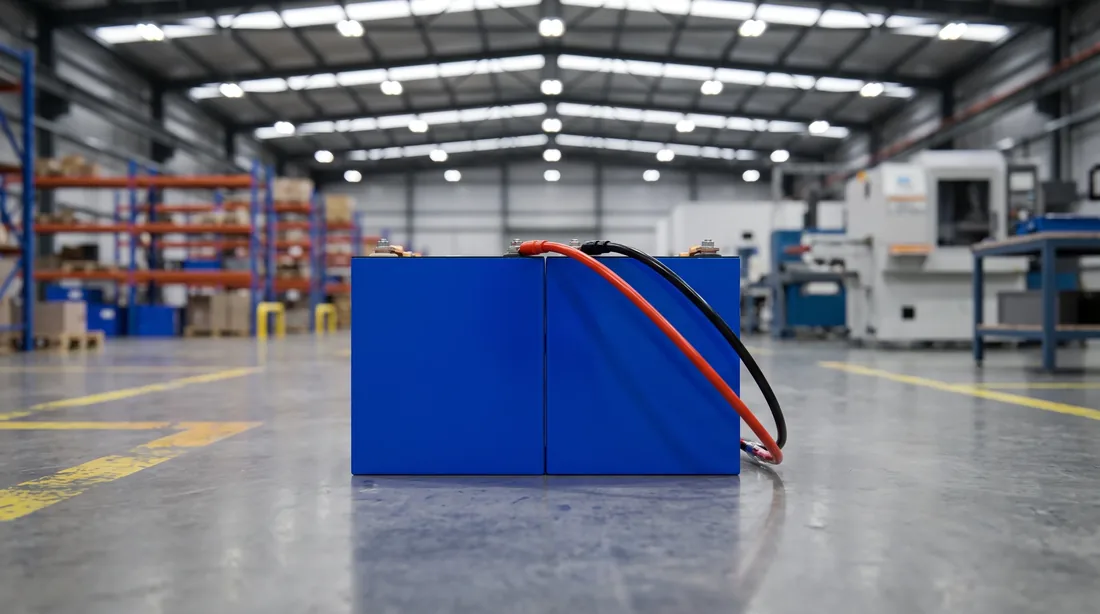
Cells in at one end, tested packs off the other — one takt across both segments +86 15327155363 [email protected]

Energy storage / the blueprint every quotation is priced against

Energy Storage Battery Pack Line, Quoted Against a
Blueprint You Can Read

A takt figure means nothing without a unit. Ours is stated: a 314 Ah prismatic cell, a 1P13S module and a 1P52S pack, with dimensions and mass published below.

⚠️ These are the blueprint configuration used for quoting — not the only configuration the line builds. The compatibility envelope is in section 08.

The three layers of the blueprint

  • 314 Ah — the prismatic cell format
  • 1P13S — the blueprint module
  • 1P52S — the blueprint pack
  • 314 AhPrismatic cell — the blueprint format
  • 1P13SBlueprint module
  • 1P52SBlueprint pack

You already know you are building a storage pack. What is still open is what it is measured against.

This page assumes that. It is here to give you a basis, not to explain what an energy-storage system is.
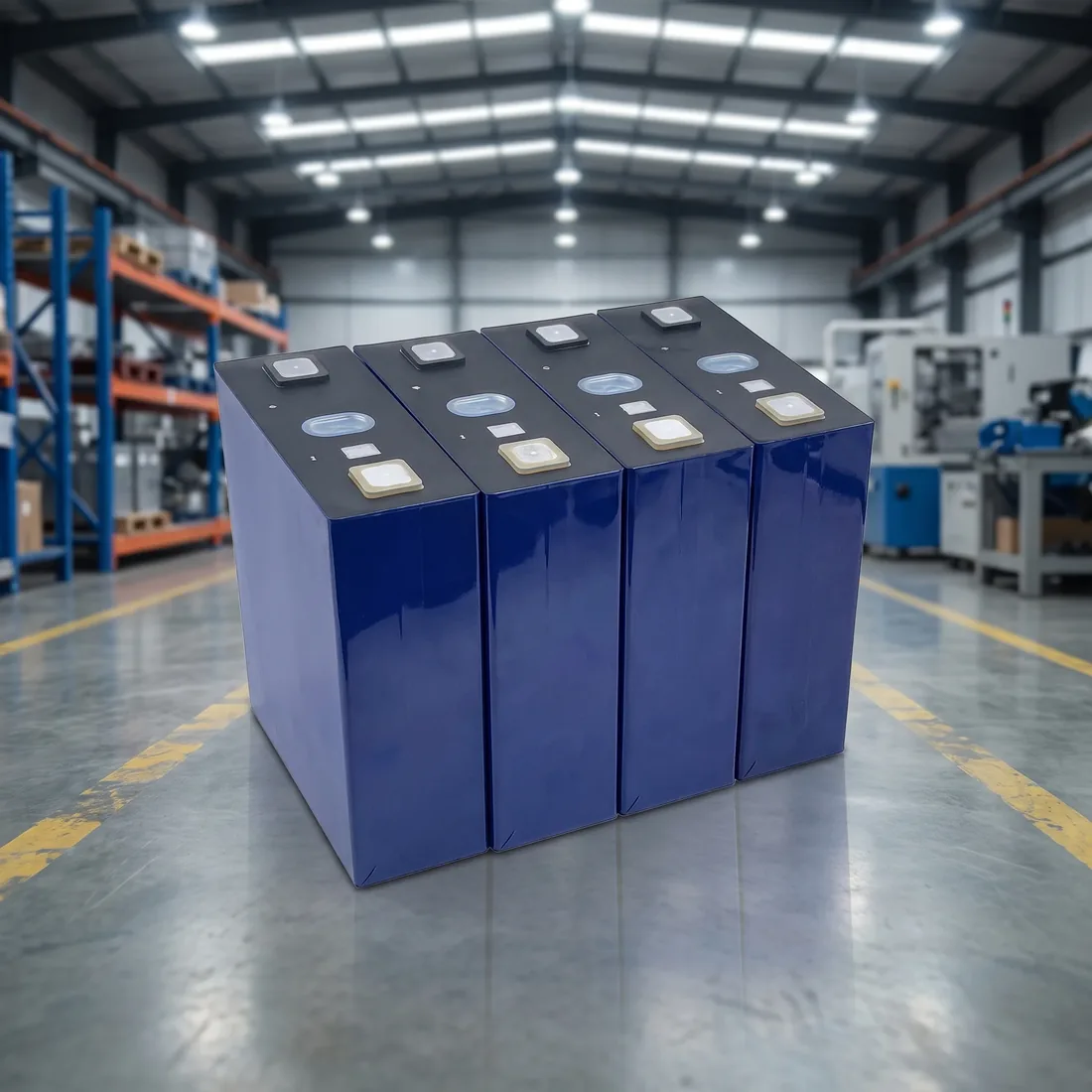
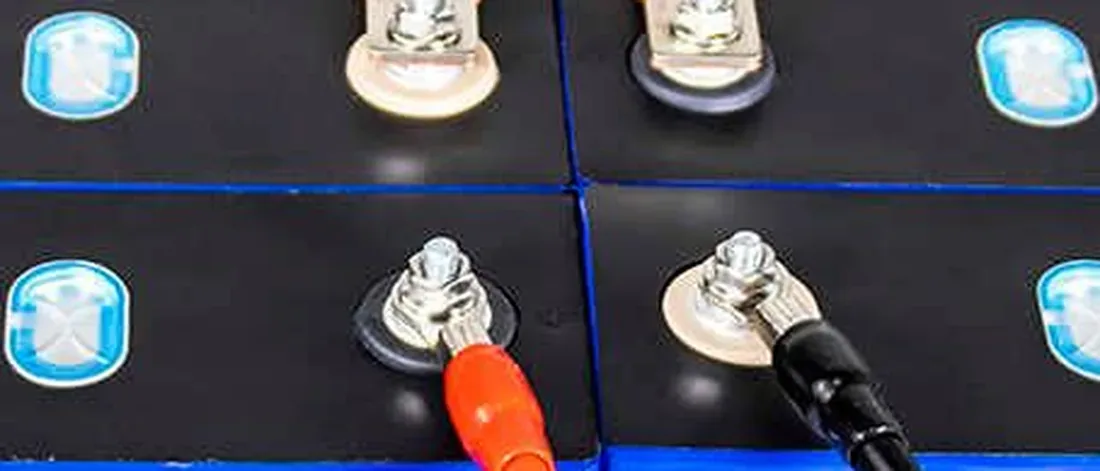
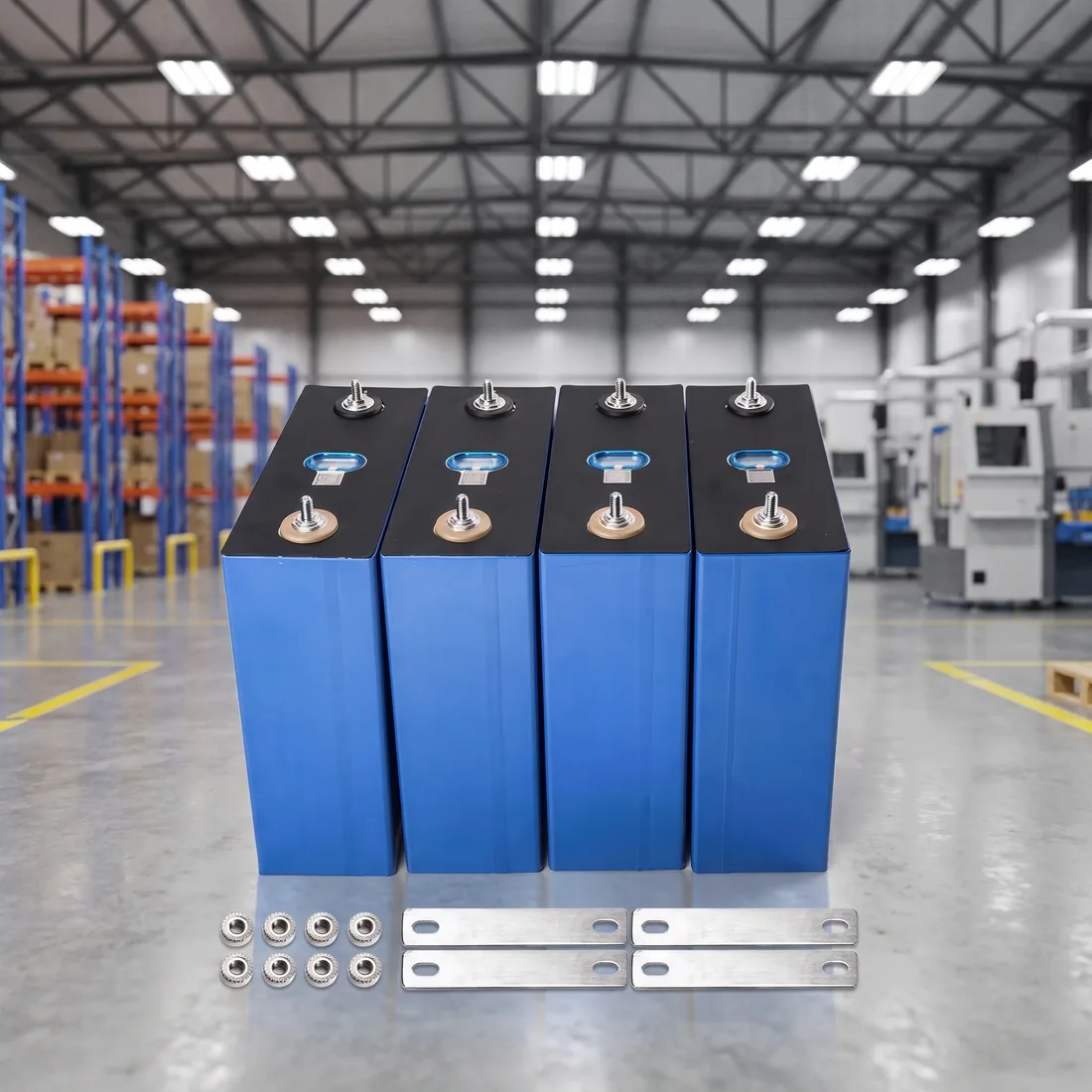
Prismatic energy-storage cells, terminals and top plate
The cell — contracted before the line
Enclosure interior with cooling plate and carrier geometry
The enclosure and plate — often still moving

The cell is contracted

Prismatic, and almost always the format the rest of your design was drawn around. Nothing on a line gets to prefer a different one.

The enclosure and the cooling plate are in design

Often at a fabricator who has not seen the line the boxes will travel through, and often still moving while you are collecting quotations.

The system class is decided

Residential, commercial and industrial, or grid-scale — decided before the equipment budget existed, and it changes what the line has to handle.

What is not decided is the basis

Three quotations arrive with three takt figures. Whether those figures describe the same work depends entirely on the blueprint each was priced against — and most quotations do not state one.

So this page starts with the blueprint rather than with the product. A basis you can read is what makes two prices comparable; everything else on this page follows from it.

Three ways a storage pack line differs from an EV one, in the places it costs money

The station sequence is the same. These three are where the same sequence behaves differently.

The pack is bigger and heavier, and that lands on handling

A blueprint storage pack is ≤400 kg against a blueprint module of ≤100 kg. Everything that lifts, positions or holds a pack is dimensioned from that mass — and mass is the parameter most often left out of a comparison.

The enclosure is usually still moving

EV enclosures arrive frozen because a vehicle programme froze them. Storage enclosures are frequently still being revised while the line is being quoted, which is why the tooling question has to be asked early rather than answered late.

The system class changes the pack, not the line

Residential, commercial and industrial, and grid-scale are three different products built by the same two segments. What changes is the pack you hand the line, and the envelope it has to sit inside.

None of the three is a reason to buy a different line. All three are reasons to state the blueprint before comparing prices — which is what the rest of this page does.
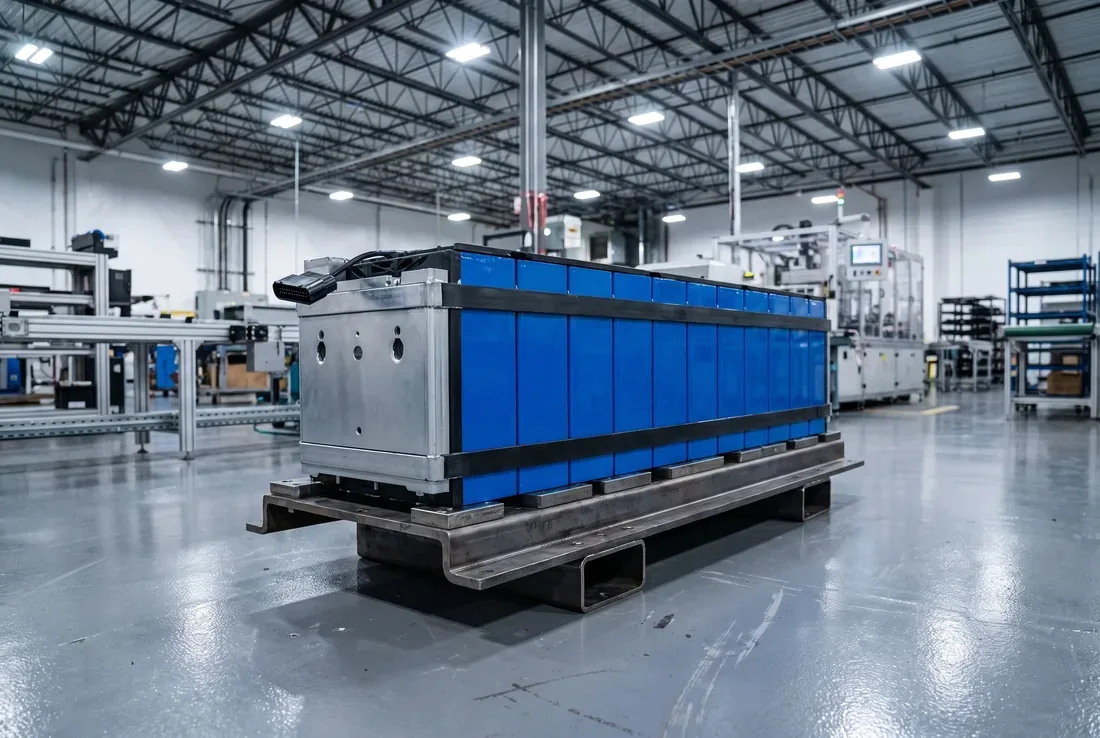
Module being handed into a pack enclosure at the insertion position
The pack is bigger and heavier
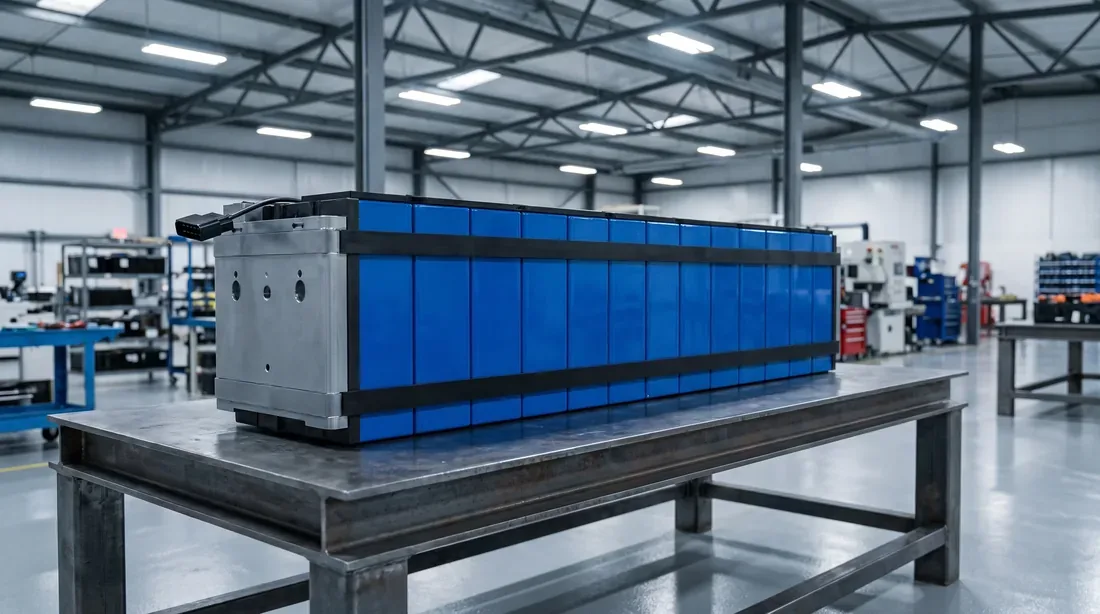
Assembled module seen along its length
The enclosure is usually still moving
Pack top face with terminals and connections
Same two segments, different pack

Eight packs per minute. Eight of what? A takt figure without a blueprint is a number with no unit attached to it.

314 Ah

Cell.

1P13S

Module.

1P52S

Pack.

The blueprint is three objects, and each one constrains the next

Cell into module, module into pack. Naming all three is what makes the basis complete rather than suggestive.
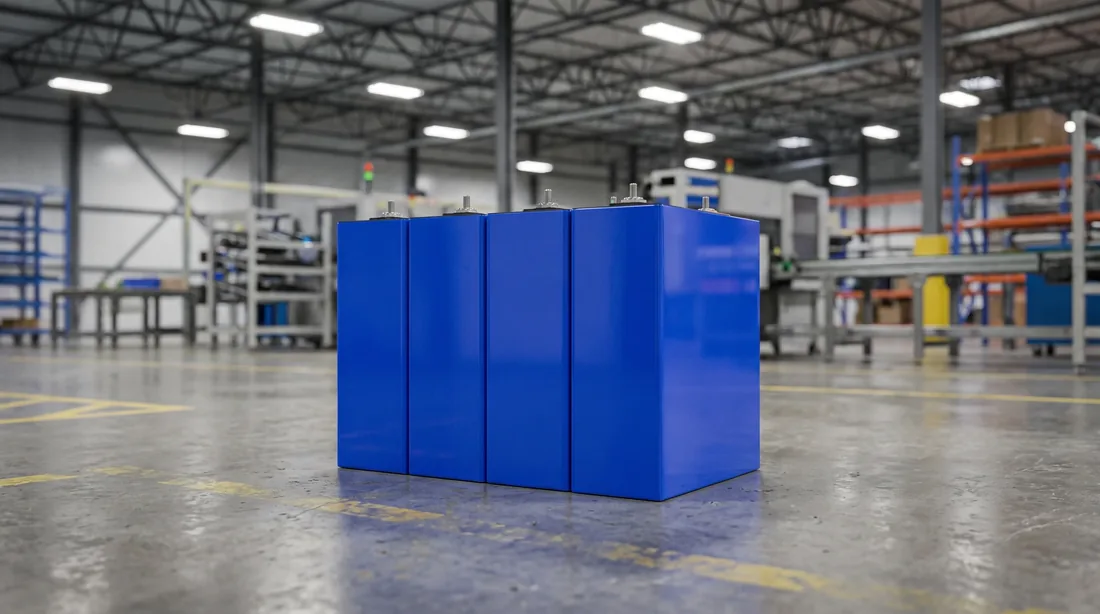
Prismatic cells of the blueprint format

The cell — 314 Ah prismatic

The format the line is dimensioned from. 280 Ah is the other format quoted against on the higher-automation tiers.
Assembled 1P13S module with busbars fitted

The module — 1P13S

Thirteen cells in series, one parallel group. It is the object the module segment builds and the pack segment receives.
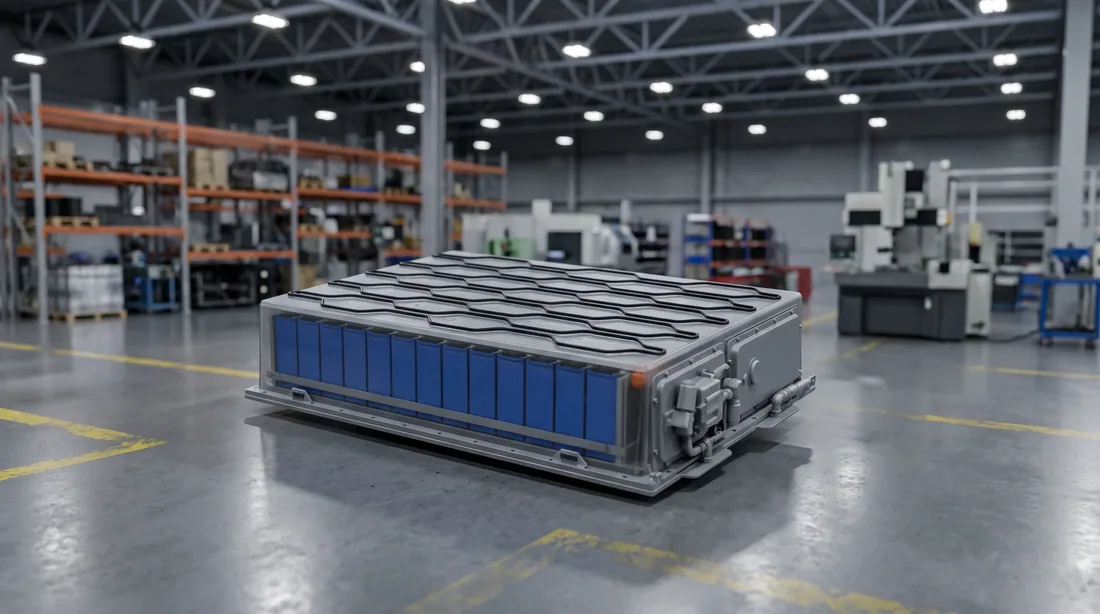
Pack enclosure with modules and cooling plate installed

The pack — 1P52S

Four blueprint modules' worth of series count, in one enclosure. It is the object your customer installs.

Each layer inherits from the one before it, which is why a change at the cell level is never only a cell change. Dimensions and mass for all three are published in the next section, in the two columns the source data actually uses.

The blueprint and the envelope, in the two columns the source data uses

⚠️ The two tiers are not quoted against the same figures. Merging them would be tidier and wrong, so this table does not merge them.

BLP-P8Standard tierBLP-P8S / P15Economy and high-automation tiers
Blueprint cell314 Ah prismatic207 ±0.5 × 173 ±0.5 × 72 ±0.5 mm280 / 314 Ah prismaticthickness 71.3 × width 174 × height 207 mm
Blueprint module1P13S1P13S978.4 × 178.9 × 205 mm, ≤100 kg
Blueprint packNot stated in this column1P52S1152 × 810 × 243 mm, ≤400 kg
Cell envelopeNot stated in this columnwidth 100–220 / height 100–220 / thickness 20–80 mm
Module envelopelength 300–1000 × width 150–370 × height 100–240 mmlength 400–1200 × width 100–300 × height 100–250 mm
Pack envelopelength 600–1200 × width 300–800 × height 100–250 mmNot in the source data
Large-format roadmap587 Ah RoadmapUnder consideration for future compatibilityNot stated in this column
⚠️ The two columns state the cell differently. BLP-P8 gives three figures without naming the axes; BLP-P8S / P15 names thickness, width and height. We reproduce each as it is specified rather than normalising them, because normalising would mean guessing which figure is which.
The pack envelope exists for BLP-P8 and is not in the source data for BLP-P8S / P15. We would rather say that than infer it from the module envelope.
⚠️ 587 Ah is a roadmap item, not a current capability, and it belongs to the BLP-P8 column only.
What a change of cell or module costs in tooling and downtime is on the compatibility and changeover page. This page states the ranges; that page states the price of moving inside them.
Blueprint 1P13S module seen along its length
The 1P13S the figures describe
Blueprint pack enclosure with modules installed
The 1P52S the figures describe

A blueprint is a pricing basis, not a product

Every performance figure this company publishes is a rate. A rate needs a unit — and this is it.

  1. Why this one

    Every rate we publish needs a unit, and this is the unit.

    Four to eight, eight, twelve to fifteen packs per minute, and the annual output ranges that follow from them, are all rates. Without a stated blueprint the unit is missing, and the figure is unfalsifiable.
  2. Without it

    Three quotations agree at “8 PPM” and describe different jobs.

    One was priced against a module you could lift with two hands; another against something twice the mass with twice the busbar length. Both statements are true. They are not the same statement.
  3. What it costs

    You cannot catch it by comparing takt figures, because the takt figures agree.

    You catch it when the line is commissioned against your actual module and the rate is not the rate — at which point the argument is about what was implied rather than about what was written.
  4. What we do about it

    State the blueprint in the same place as the rates.

    1P13S at ≤100 kg and 1P52S at ≤400 kg, against a 314 Ah prismatic cell. Every PPM figure on this site is quoted against it, and the annual output figures state the same basis again: the blueprint cell, 300 days a year, eight hours a day.
  5. What proves it

    One question, asked of every quotation including ours.

    Take any rate we publish and ask what it is a rate of. The answer is on this page, in the same units. Ask a competing quotation the same question. A rate whose basis cannot be produced is a rate that was never meant to be compared.

Takt and annual output per tier are stated once, on the tier-selection page.
Blueprint module viewed from above
The unit behind every rate
Prismatic cells with terminals prepared
What the module is counted in
Finished units leaving the line at the offload position
What comes off, per minute

The envelope tells you whether to start the conversation, not what your line will cost

Both tiers publish ranges. The ranges answer one question, and it is worth being precise about which.
Two modules of different length side by side

Inside the envelope means the sequence works

Your module or pack can be built by the same stations in the same order. That is what the range is a statement about — nothing more and nothing less.
Insertion and receiving tooling on a station

It does not mean the tooling is the same

Fixtures are cut to a point, not to a range. Two modules both inside the same envelope still need different insertion, fixing and pressing tooling.

A starting question, not a closing one

The envelope tells you the conversation is worth having; the drawing tells you what it costs.

Both tiers, both ranges

The full ranges are in the table above — including the one the source data does not cover.

Where the price of moving lives

Tooling, downtime and changeover are on the compatibility page. This is a basis question; that is a price question.

Three classes of storage system — industry classification, not our product line

These are industry categories, reproduced so the rest of this page has something to refer to. They are not three products we sell.

Industry classification

Residential storage

5–30 kWh

Voltage level

48 / 120 / 240 V

Architecture

Inverter plus integrated battery unit

Typical application

Household energy management, power quality

Commercial & industrial storage

100 kWh – 10 MWh

Voltage level

400–800 V

Architecture

Modular packs with a separate PCS

Typical application

Peak shaving, PV-storage-charging, microgrid backup

Grid-scale storage

10 MWh – 1 GWh+

Voltage level

10 kV and above

Architecture

Containerised storage with a central PCS

Typical application

Renewables integration, grid frequency regulation, black start
Scope, stated plainly: our equipment covers module and pack assembly. Container assembly, PCS and system integration are not ours — the architecture column above is describing the industry, not our supply.
Prismatic cells and busbar hardware for a small storage pack
Residential class — smaller packs
Modular pack interior with cooling plate
Commercial and industrial class — the blueprint case
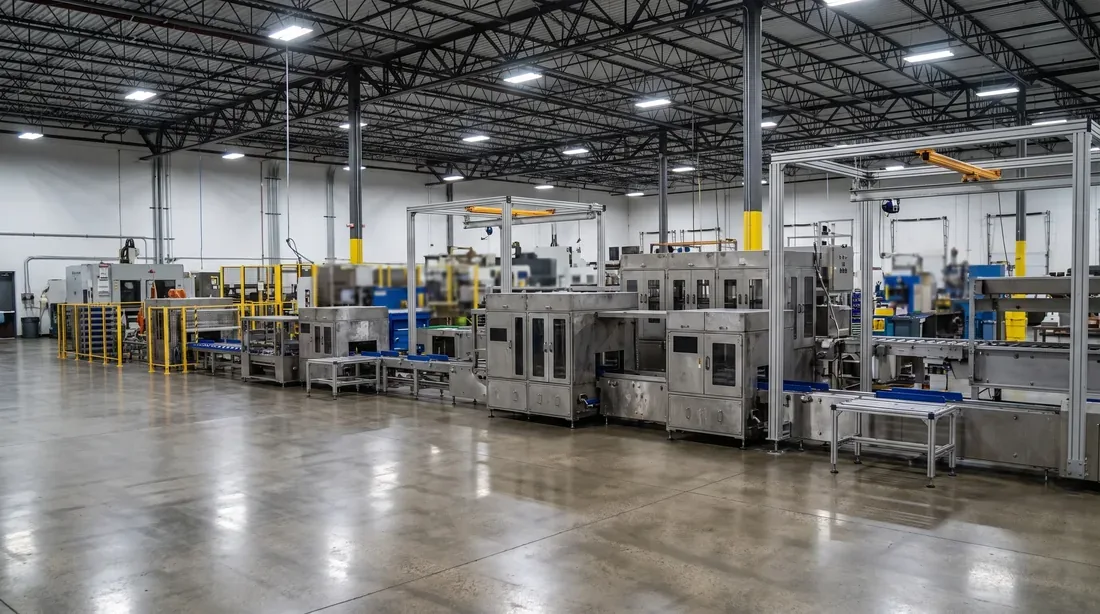
Assembly line producing packs in volume
Grid-scale class — same packs, more of them

Air or liquid — the choice that reaches furthest into the pack segment

⚠️ Industry practice, reproduced as context. Which route your pack uses changes what the pack segment has to do with it.
Industry practice
Adhesive dispensing over an enclosure floor before a cooling plate is bonded

Air cooling

Simpler structure, lower cost, less even heat distribution. Typical for residential storage, small and mid commercial and industrial systems, and telecom base stations.
Module being installed into an enclosure that carries a cooling plate

Liquid cooling

Faster and more effective heat removal, with higher structural and maintenance cost. Typical for grid-scale storage plants, fast-charging installations and hot, humid environments.

Liquid cooling puts a plate in the pack segment

A cooling plate arrives, is leak-tested, and is bonded to the enclosure floor — three stations an air-cooled pack does not need in the same form.

Which is why it belongs in the first email

The cooling route changes the station list before it changes anything else.

The module segment barely notices

The module is the same object either way. What changes is what it is installed into.

What changes on the line when the system class changes

The classification above is the industry's. This is ours.
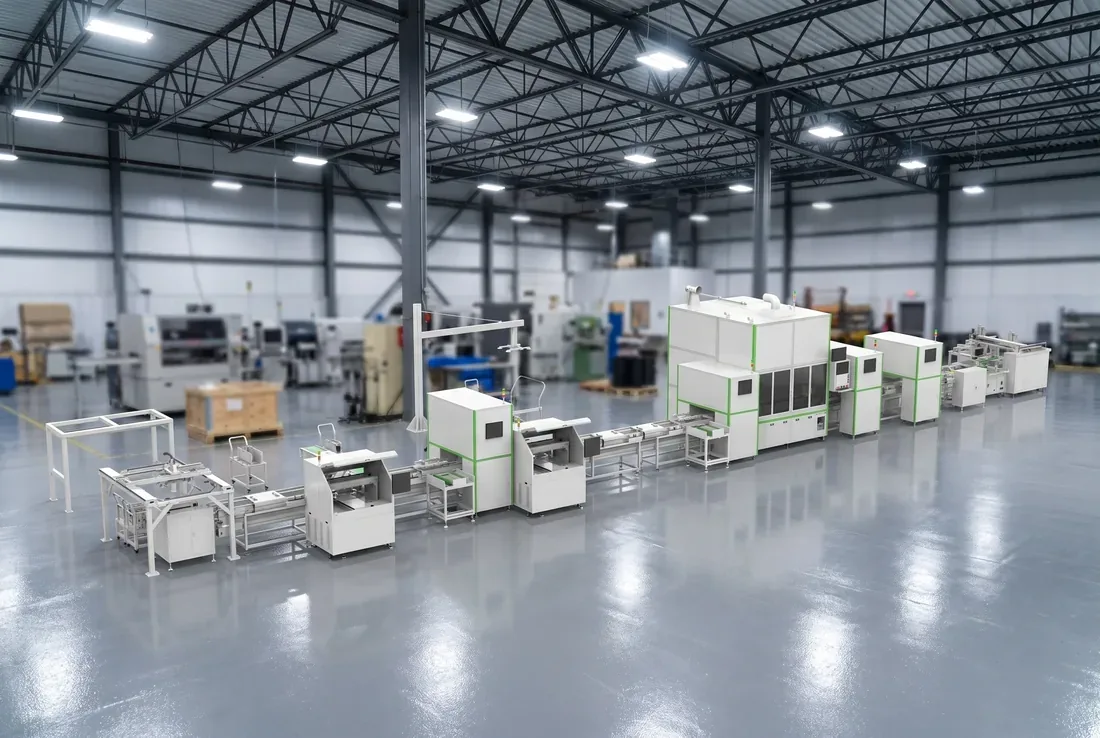
Modular pack assembly stations in a row
Modular packs — one at a time
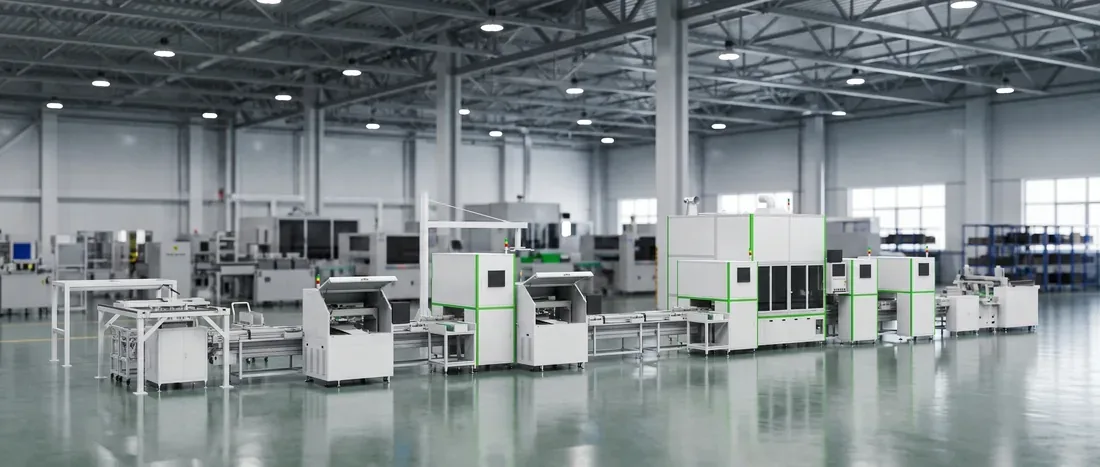
Line producing packs along a plant bay
More of them — same two segments

Residential — smaller packs, same two segments

The pack is lighter and the enclosure smaller, so handling and fixtures scale down. The sequence is unchanged, and the tier that fits is usually decided by output rather than by size.

Commercial and industrial — the blueprint case

This is where the published blueprint sits: a 1P52S pack in a modular enclosure, liquid- or air-cooled depending on the installation. Most of what this site publishes is quoted against this case.

Grid-scale — same packs, more of them

The pack we build does not become a container; it becomes one of many packs that somebody else integrates into one. Our scope ends where the pack is finished and tested.

In all three, the module segment and the pack segment are the same two segments. What the class actually decides is the pack you hand the line — its mass, its enclosure, its cooling route — and every one of those is a tooling input rather than a different line.

Send the pack drawing, and we will quote against it instead of against the blueprint

The blueprint is what we publish. Your pack is what you are buying a line for — and the moment we have its drawing, every figure in a quotation can be restated against it.

Reply within 24 hours / If the enclosure is still moving, say so — that changes what is useful to send

Four things move between the published blueprint and the pack you actually build

Each one is decided somewhere specific, and each one has a page that owns it.

01

Dimensions

Your cell, module and pack against the envelopes in section 06. Inside them the sequence holds; the fixtures are still cut to your figures.
02

Mass

Everything that lifts and positions is dimensioned from it — which is why ≤100 kg and ≤400 kg are published beside the dimensions rather than after them.
03

Cooling route

Air or liquid, which decides whether a cooling plate enters the pack segment at all.
04

System class

Which mostly decides how many packs, not what a pack is — and where our scope ends.

What we need to restate a quotation against your pack

Cell format, module drawing, pack drawing with enclosure and cooling detail, target output.

What stays the same regardless

Two segments, one takt figure, one acceptance document. Those do not move with the blueprint.
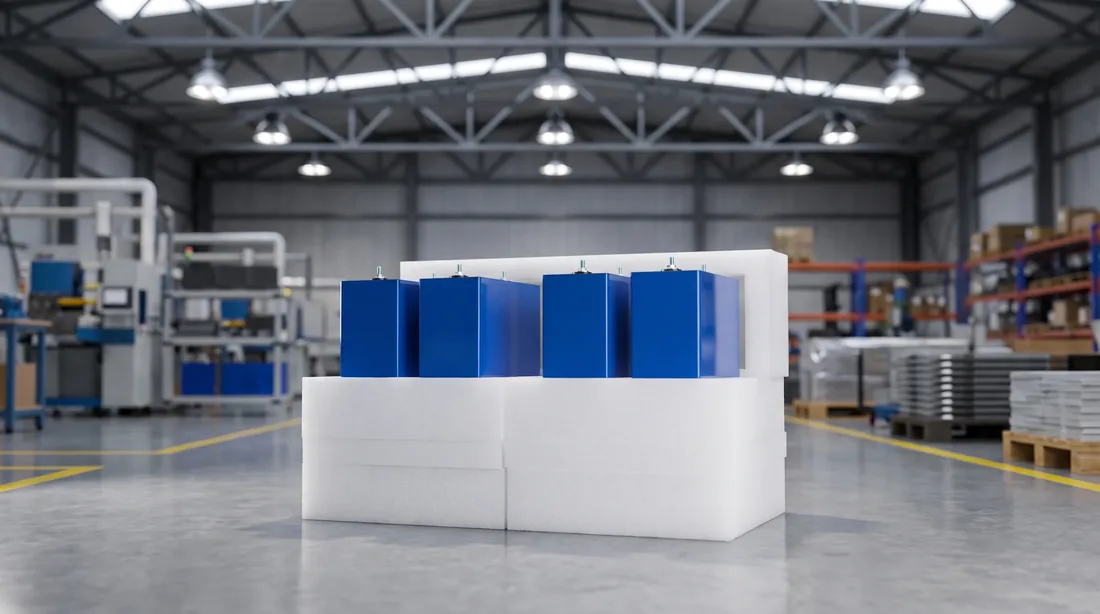
Prismatic cells arriving before the line
What you send
Assembled module with connections in place
What comes back restated
Prismatic cells presented in the orientation the line receives them
What every figure on this page is ultimately about

Four questions that make two storage-line quotations comparable

What blueprint is the takt figure quoted against?
If the answer is not a configuration with dimensions and a mass, the figure has no unit.
Are the envelopes stated per tier, or as one range?
Ours differ by tier, and one of them the source data does not cover. A single merged range is tidier and less true.
Is the cooling route priced in?
A liquid-cooled pack brings a plate, a leak test and a bonding station with it.
Where does the supplier's scope end?
Ours ends with a finished, tested pack. Container assembly, PCS and system integration are somebody else's.

We publish a blueprint, two envelopes and one gap. A quotation with no blueprint and no gaps is not a more confident quotation — it is a less specific one.

Say which cooling route you are on

It is the earliest fork in the specification and the cheapest one to get right.

Air and liquid are two different lines
The enclosure, the gluing station and the test sequence all change with it, which is why it is worth stating before anything else.
Phone / WhatsApp
Address
Wuhan, Hubei, China
Response
Reply within 24 hours
Line producing storage packs along a plant bay
Where a blueprint becomes your pack